2027 founding season · Register your interest
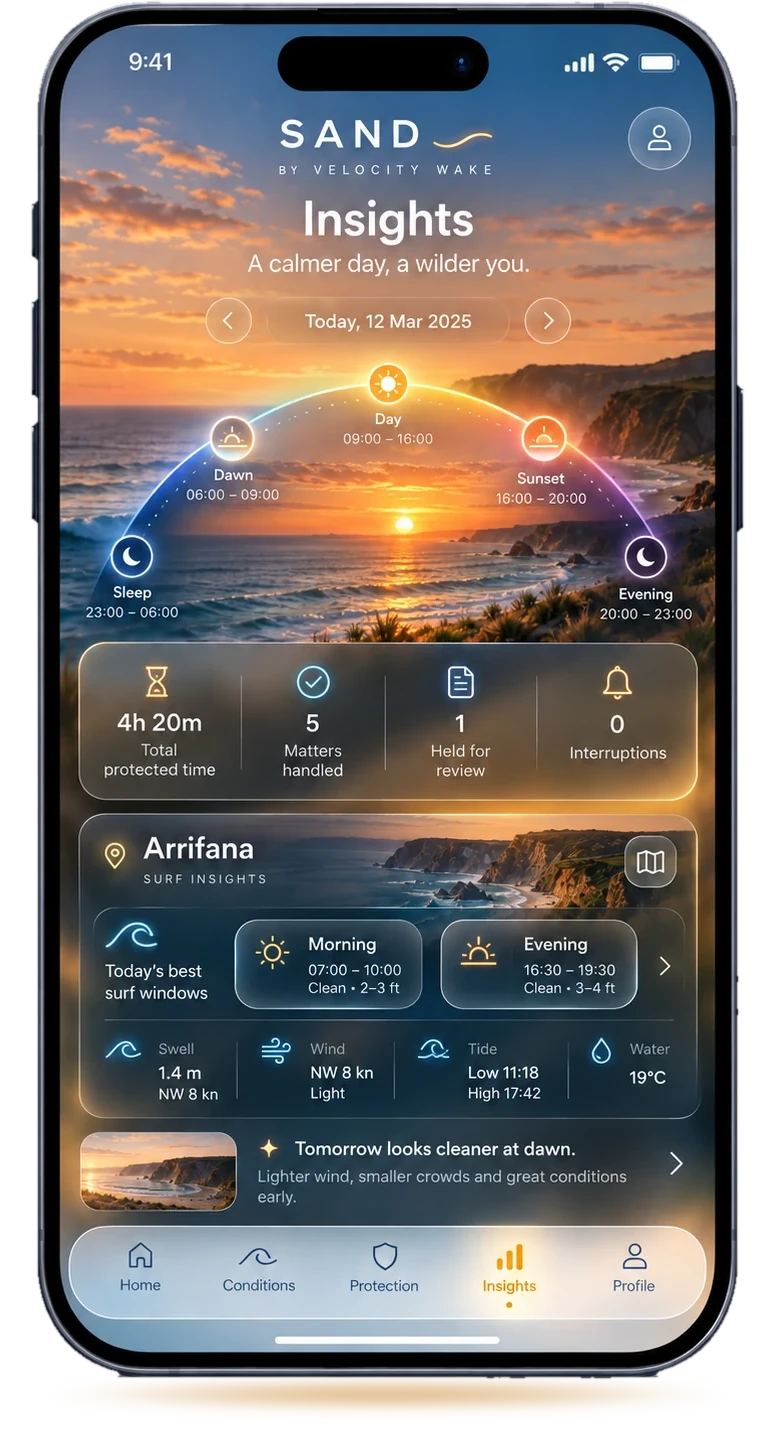
Phones in the SAND.
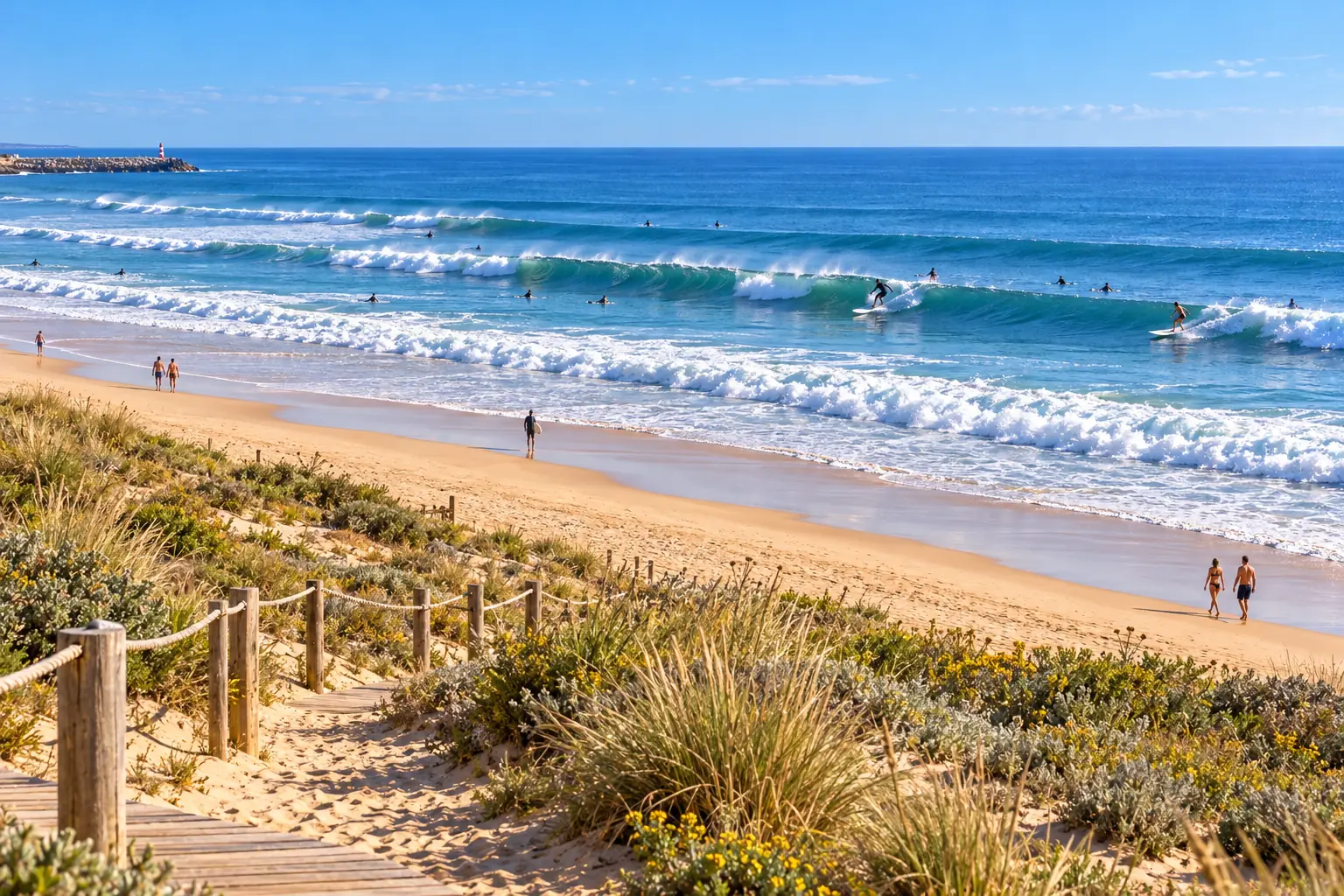
Surfers in the lineup off a long Algarve beach, seen from the dunes above Meia Praia

Lagos ✦ Algarve, Portugal

Surfing in Lagos, Portugal.

A local guide to the waves of Lagos: the beaches by name, the seasons, the swell and the wind, and where surfers go when the bay goes quiet.

Read the water first.

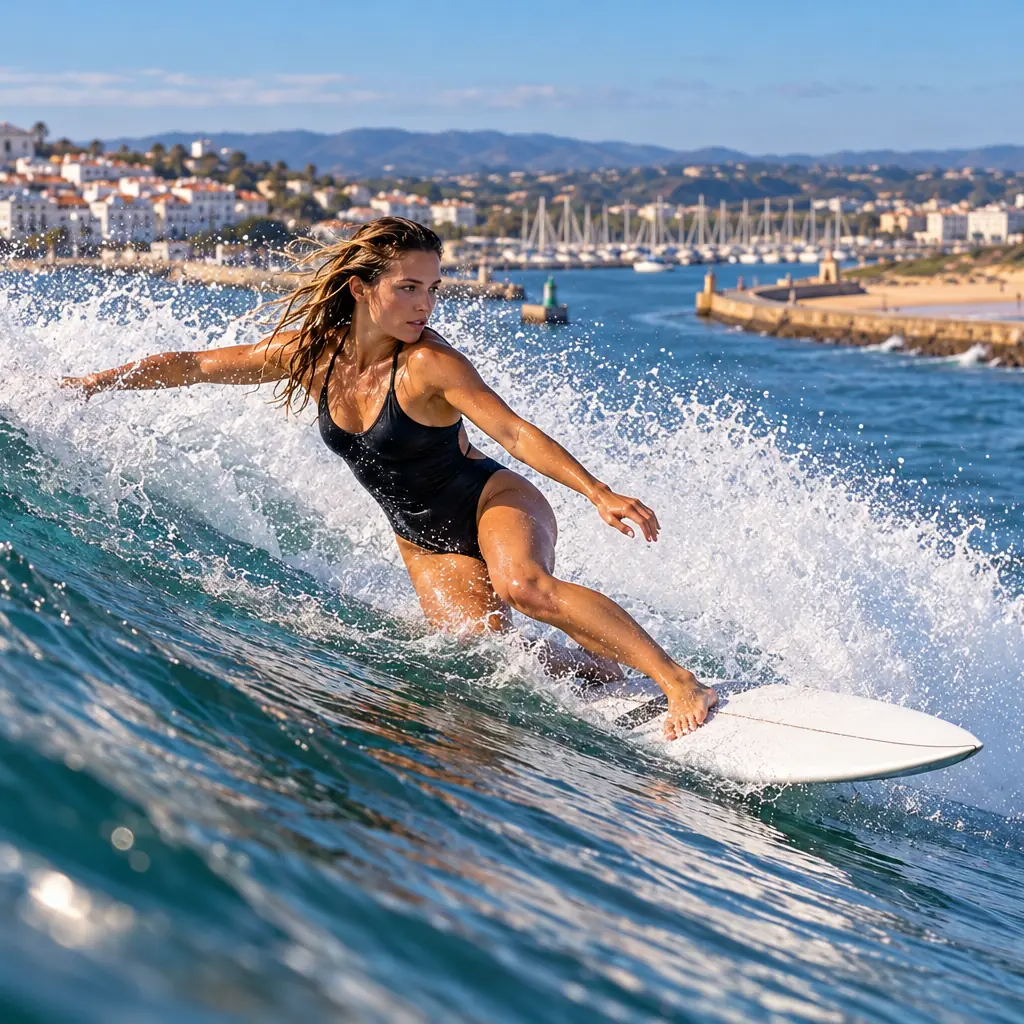
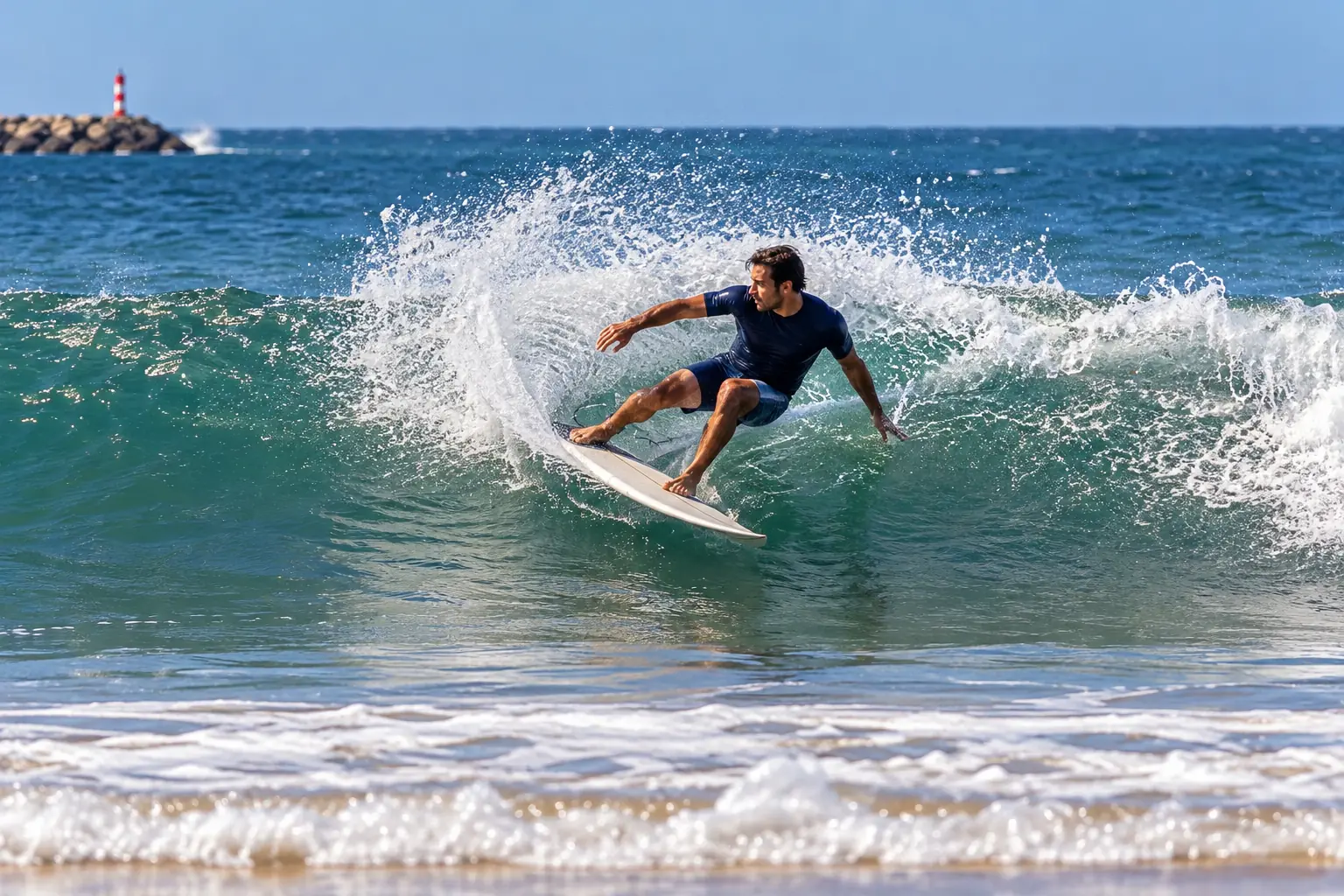
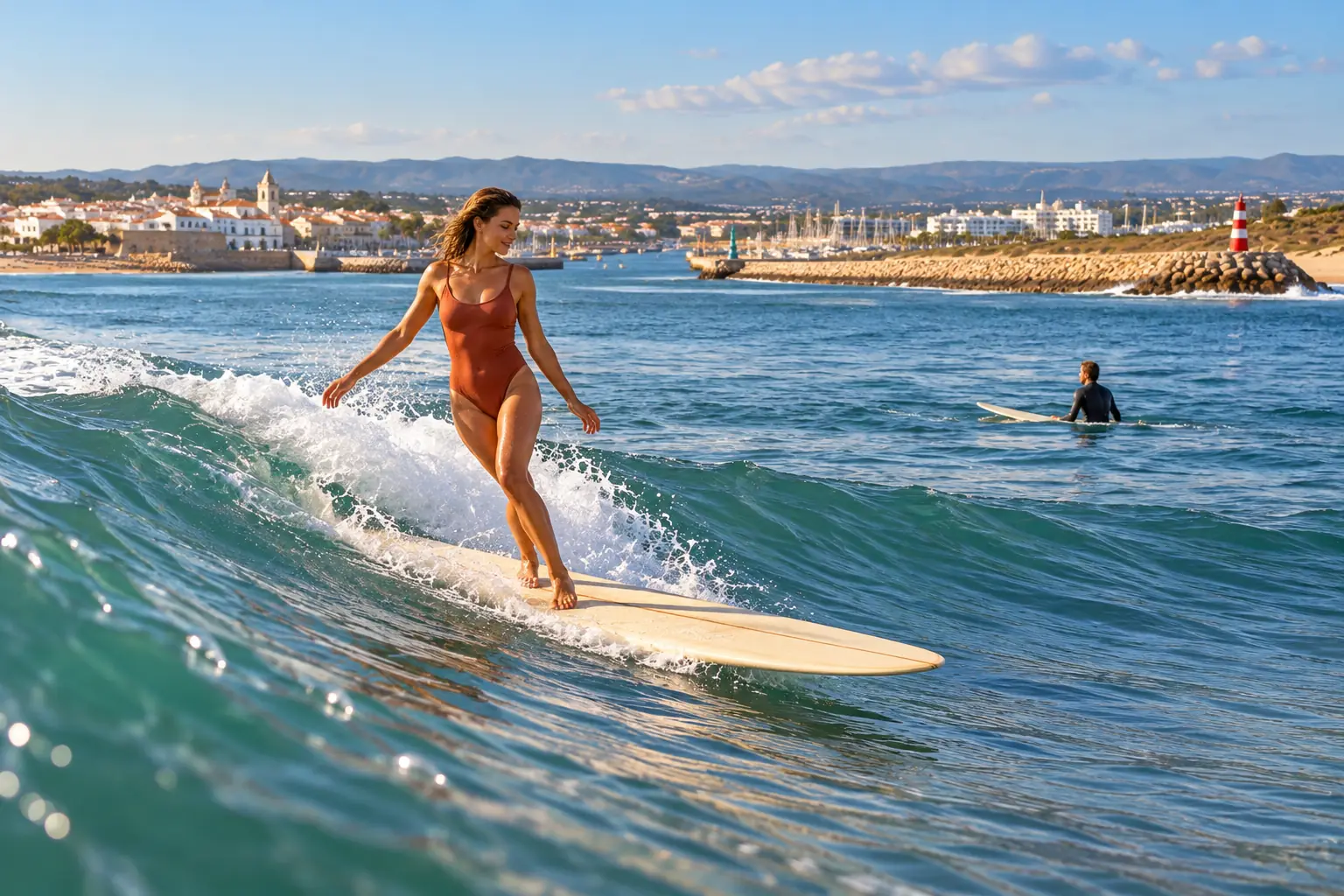
A surfer carving a turn on a small wave off Lagos, with the marina and old town behind
Lagos · On the wave

Surf in Lagos, at a glance

What to know before you paddle out.

The short version, drawn from local guides, the municipality and forecasting sites.

Beaches
Meia Praia and Porto de Mós
Meia Praia is a dune-backed beach of about 2.5 miles that curves east from the marina and faces south. Porto de Mós is a long beach between tall cliffs, a short drive west of town, more open to the west.
Waves
Gentle, and picky
Lagos faces south while most Atlantic swell arrives from the northwest, so the bay needs the right swell and wind to switch on. Summer is often flat.
Level
First waves in town, more punch west
Meia Praia for first waves and small-wave surfing; Porto de Mós for confident surfers, with a shallow reef at the far end.
Season
Autumn through early spring
Autumn through early spring is the best bet for the town beaches. Guides also like September, October and May for learners.
Water
About 61°F to 70°F
About 61°F in January, about 70°F in September. A 3/2 wetsuit covers most of the year in Lagos.
Wind
North winds keep it clean
North winds are the usual offshores. In summer, afternoon sea breezes make mornings the best window.
When it is flat
Drive west
Sagres is about 20 miles away, and the Atlantic beaches farther on take far more swell.
Getting around
A walk, then a car
Meia Praia is a walk from town. For almost everything else, a car helps.
Forecasts change dailyCheck swell, wind and tide before you goRegister your interest →
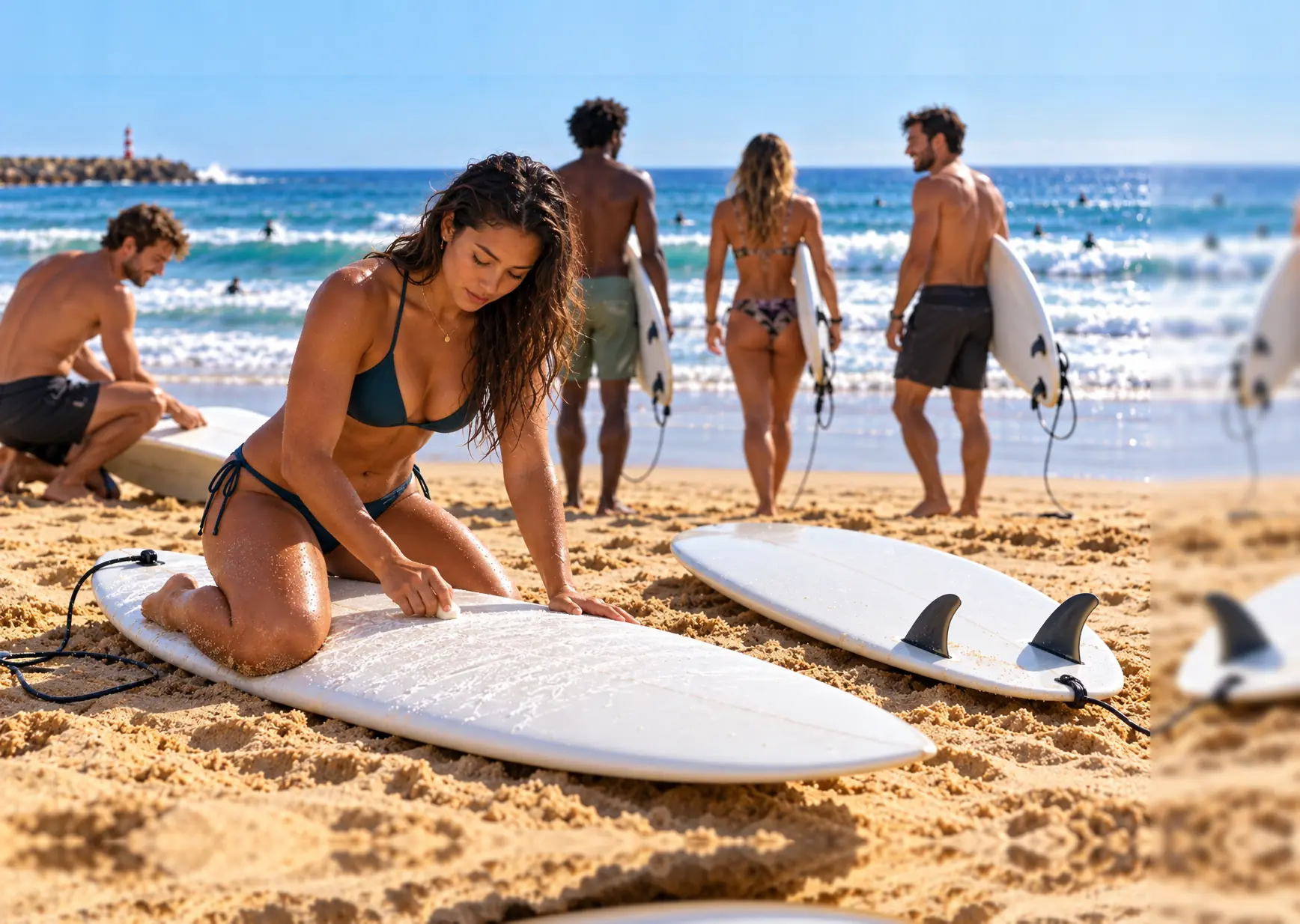
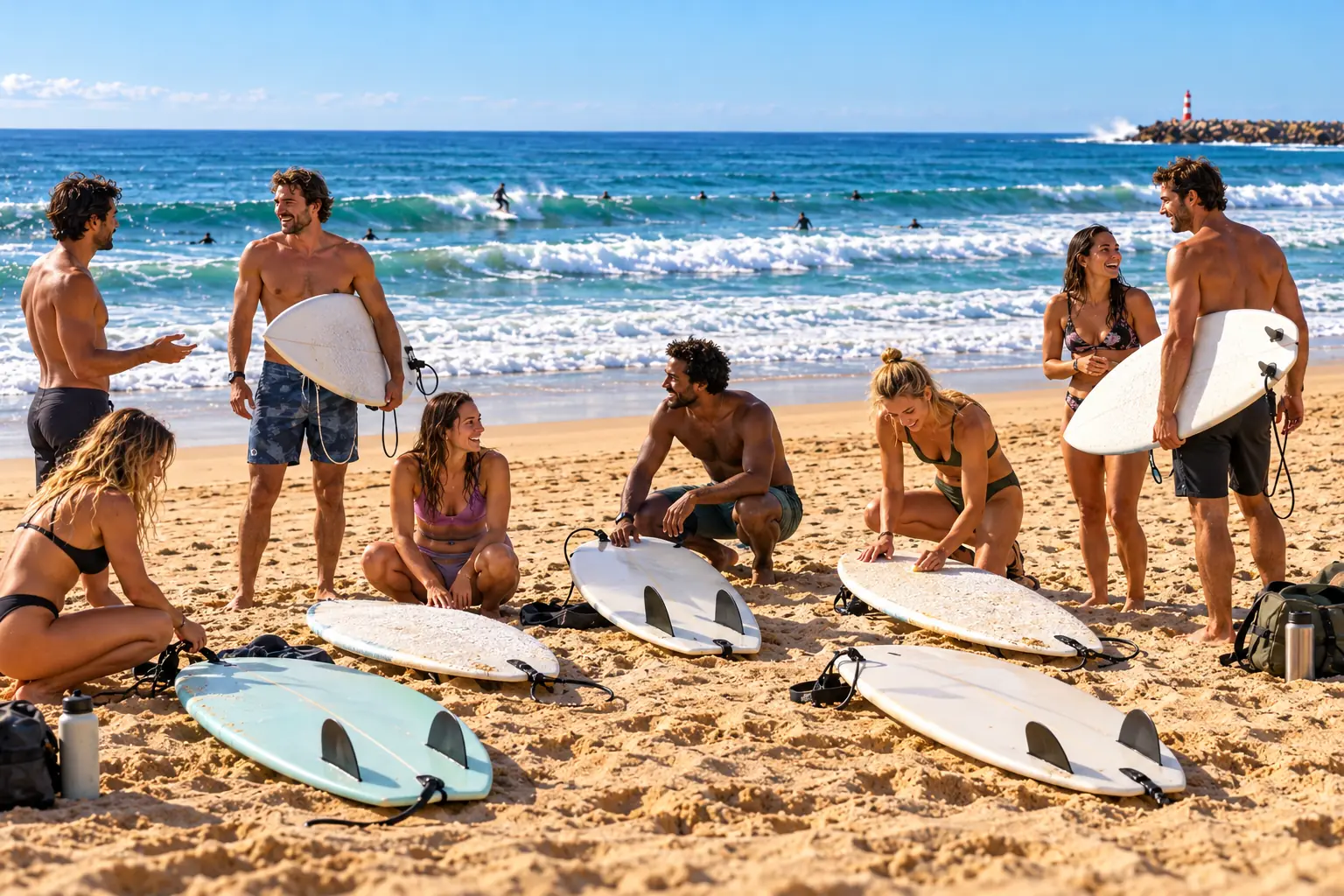
A surfer kneeling on the sand to wax her board, with friends and the Lagos breakwater light behind

The town beach

Meia Praia.

Lagos is a town of walls and cobbles, but cross the river and the sand begins. Meia Praia runs for more than four kilometers, about 2.5 miles, along the curve of the bay toward the Alvor wetlands, backed by a dune system the municipality has recently restored. It is a beach break with peaks scattered along its length, so even on a busy day the lineup rarely feels crowded, and the bottom is sand, with no rocks to worry about.

See Lagos beyond the surf →

Surf map: Amoreira to Alvor →

The wave is mellow.

Local guides describe it as friendly and rolling, most often up to about four feet, starting to work from around three feet and turning rippy and hard to paddle out in once it grows toward six. It breaks close to shore, which is why it suits beginners and intermediates, and longboarders working on trim and cross-stepping.

A word of honesty.

Guides do not agree on every detail, and that is telling: this is a bay that needs a particular swell and wind to switch on. Some like it on a south or southeast swell with a north wind keeping the faces clean; others say it is at its best at low tide with a long-period west or northwest swell and a north wind. What they all say is that Meia Praia is a gentle, sometimes flat, sometimes mushy beach, a bay for small-wave days rather than Portugal’s most consistent surf.

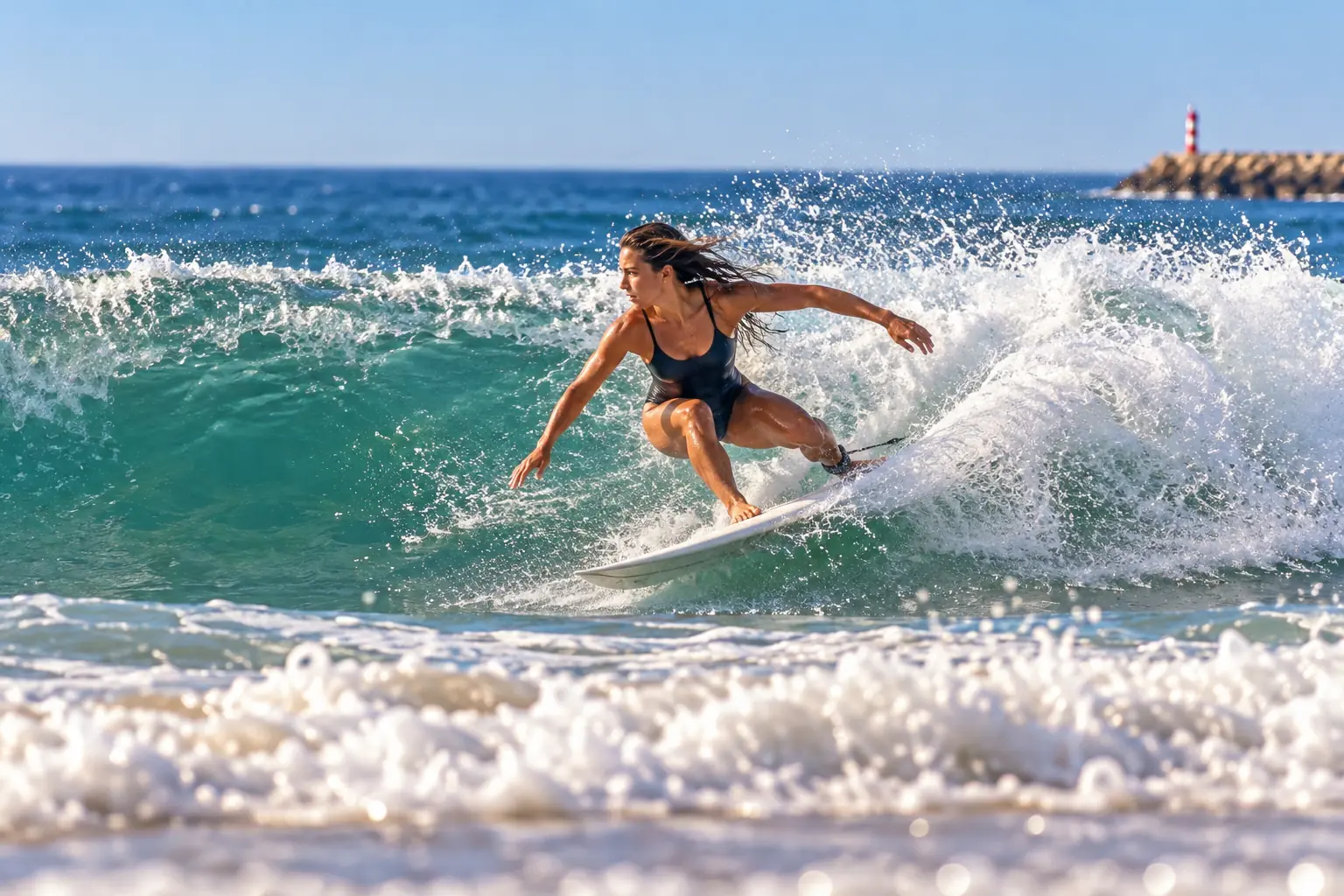
A surfer carving a turn on a small wave off Lagos, with the marina lighthouse behind

The other town beach

Porto de Mós.

On the western side of town, past the Ponta da Piedade cliffs, Porto de Mós is a long beach set between tall cliffs, a short drive from town and with a quieter, more private feel than Meia Praia. It is more open to the west and takes more swell than Meia Praia does: guides put its window at southeast through south to west swell, from about three feet up to around twelve, best at low to mid tide, with a northerly wind holding the faces clean.

It is a winter beach more than a summer one. Surfers tend to use it from autumn to spring, and especially on days when northerly swells are too big for the Atlantic beaches farther west. It can serve up faster, punchier walls than Meia Praia, with a mix of sand and flat reef.

Know the beach before you paddle out. Rocks are scattered along it, and storms change how much sand covers them. As you look out to sea, the sandy stretch is toward the left, a mix of sand and rocks sits in the middle, and the far right end is a shallow reef that guides advise leaving to competent surfers (sea urchins live there). In stormy winter swells, currents can run strongly along the beach. In summer, when it does break, you will be sharing the shore break with swimmers.

  • Best for: intermediates, and advanced beginners on the sandy section (guides differ on how much experience it needs); experienced surfers on the reef.
  • Best conditions: southeast-to-west swell, low to mid tide, light northerly wind.
  • Watch for: rocks, urchins at the right end, strong currents on big days.
Within 30 minutes

Near Lagos, when you want a change of scene.

Three south-coast names you will hear, all within a short drive.

Praia da Luz

A reef break below Rocha Negra, on the way west. Guides call it a fine wave that likes a north wind and mid-winter swells, and they describe a strongly local lineup. Most visitors enjoy the beach and watch the waves.

Salema

A village beach with whitewashed houses above it and a sandy bottom, a gentle spot for learners at low tide when a moderate northwest swell is running on the Atlantic coast.

Zavial

A south-facing bay on the road toward Sagres. A reef point on the west side fires on big winter swells and is for experienced surfers only; the other end of the beach is gentler and a place for smaller waves. Like Lagos, it depends on the swell.

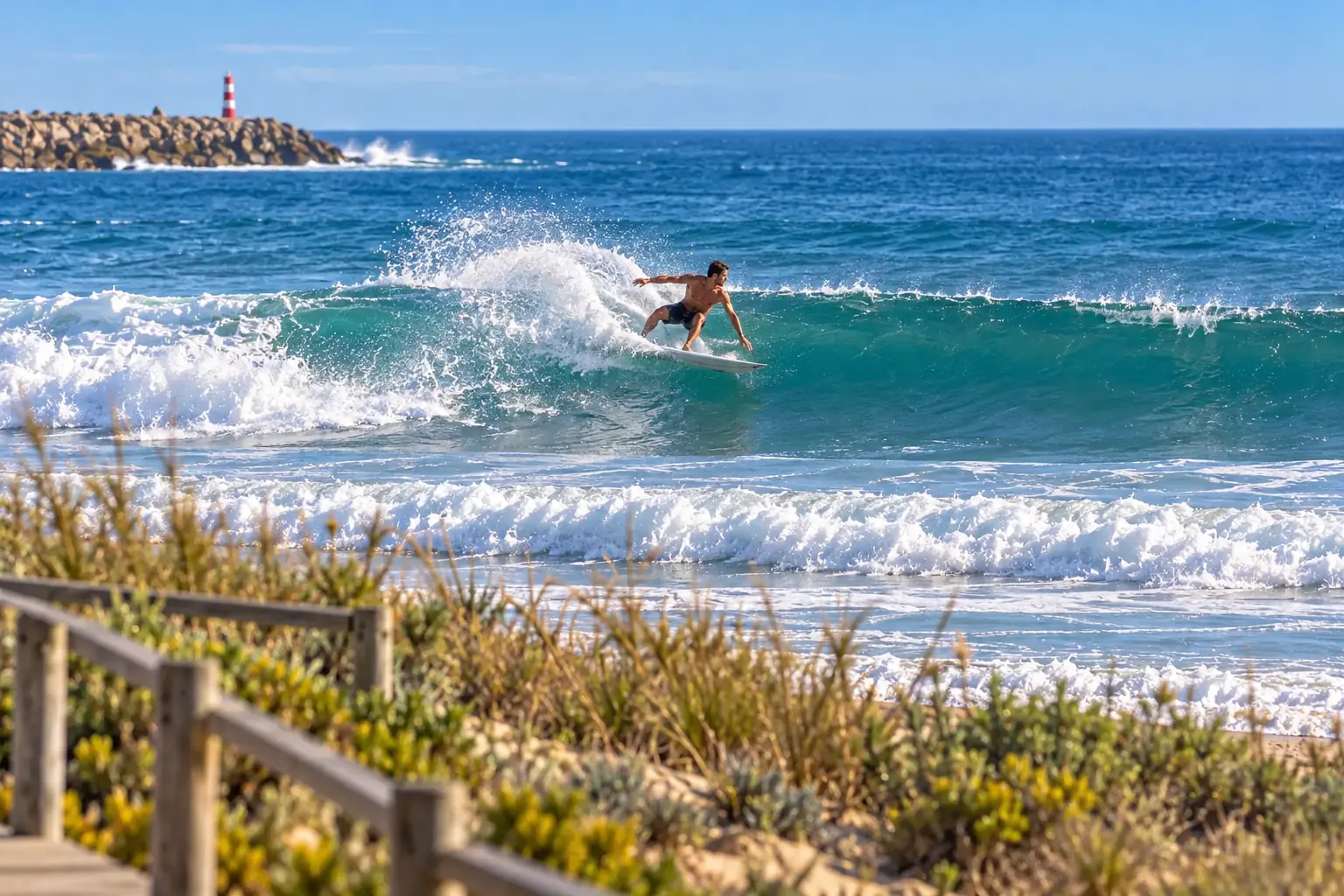
A surfer riding a small wave off a Lagos beach, seen from the dune boardwalk, with the marina lighthouse in the distance

Reading the bay

Swell, wind and tide in Lagos.

The key to Lagos is its corner of the coast. The town beaches face south, or a little east, and most Atlantic swell comes from the northwest, so the big winter swells have to wrap around the headland to reach the bay, and many summer days bring none at all.

  • Swell. Winter storms in the North Atlantic are the usual source. Occasional southeast swells, called Levante swells, can also light up Meia Praia, sometimes even in midsummer.
  • Wind. The prevailing wind along the Algarve is from the north, and the land shields Meia Praia from it, so north winds often keep the water clean. A strong westerly can blow Porto de Mós out.
  • Tide. Porto de Mós likes low to mid tide, and low is best. One guide’s sweet spot for Meia Praia is low tide with a long-period swell and a north wind.
  • Morning first. In summer an afternoon sea breeze can turn the bay choppy, so the early hours are usually the best.

Check the forecast each evening, then decide between the town beaches and the drive west.

The seasons

When to surf in Lagos, month by month.

A short planning picture of typical conditions, not a forecast. Swell, wind and water change from year to year.

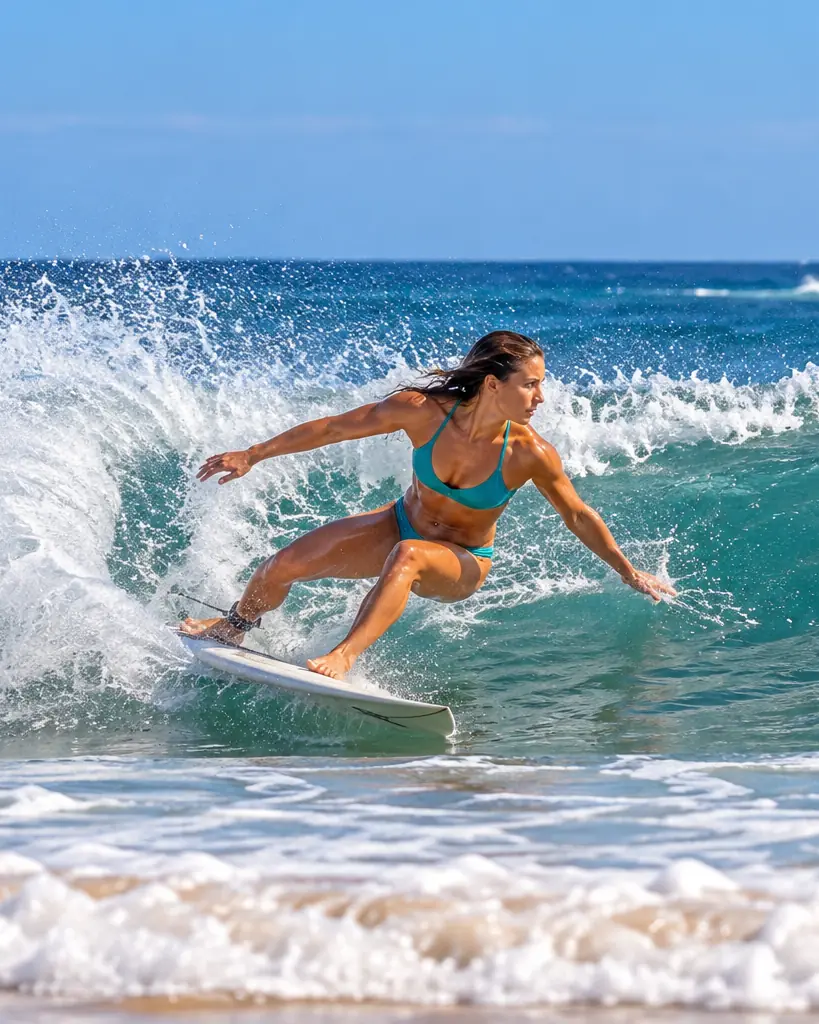
Surf in winter: a surfer carving through spray on a Lagos wave

November to February

Typically the surf months. The best chance of waves at both town beaches, as North Atlantic swells arrive. Water is typically at its coolest, about 61°F in January and February, and about 66°F in November. On the Atlantic coast, some winter days are too big or too stormy to surf.

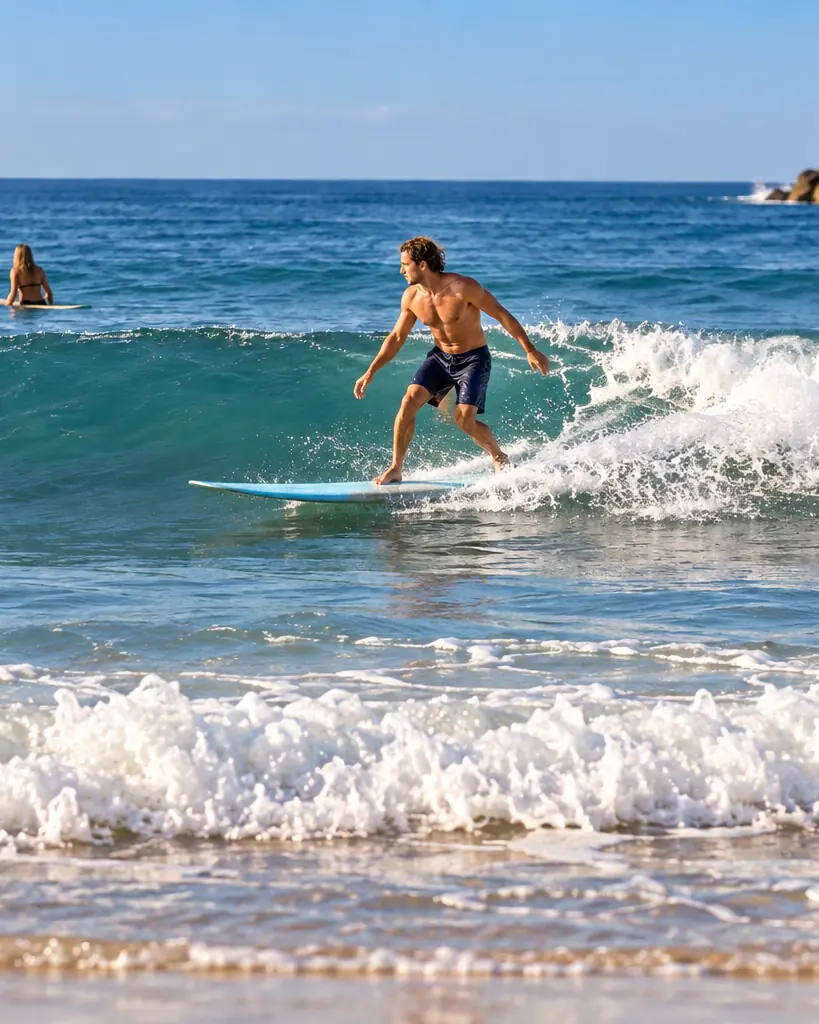
A surfer riding a small, clean wave in spring

March to May

Typically cleaner and calmer. On the Atlantic coast, spring swells are usually smaller and often cleaner. One guide picks May, and September, as the best months for beginners. Water typically warms from about 61°F in March to about 65°F in May.

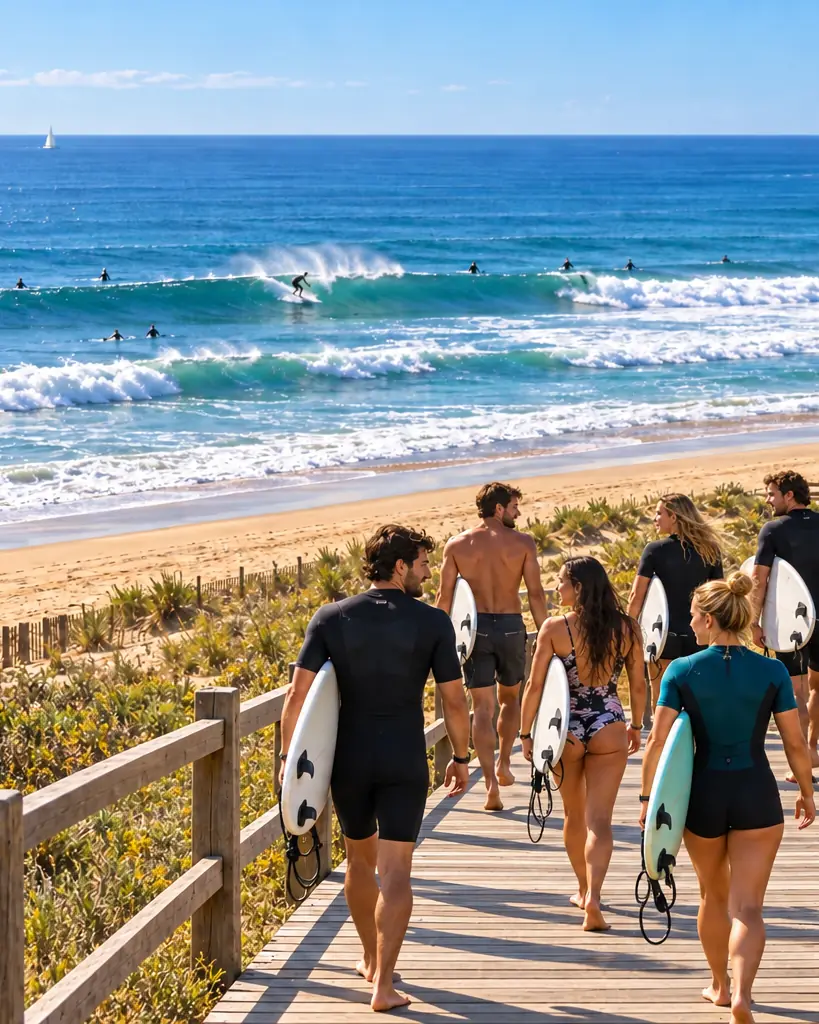
Friends walking a dune boardwalk to the beach with their boards in summer

June to August

Typically warm, busy and often flat. The bay can be lake-calm for weeks, with the occasional southeast swell. Beaches are busy, and the sea typically runs about 68°F to 69°F. Mornings are best.

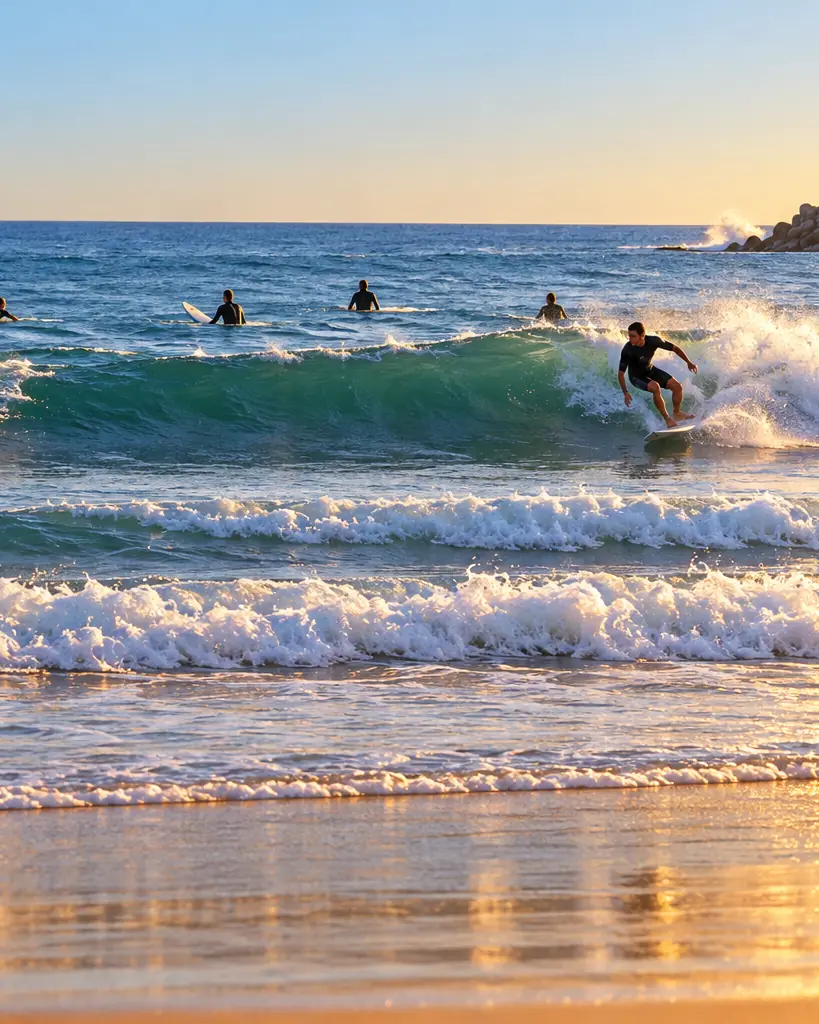
Surfers waiting for waves in golden autumn light

September and October

Typically the sweet spot. Warm water, about 70°F, the first autumn swells and a little less crowding. One guide calls late September and October the best of the year.

Typical sea temperature, °F

  • Jan 61.5
  • Feb 60.8
  • Mar 60.6
  • Apr 62.8
  • May 64.9
  • Jun 67.6
  • Jul 68.4
  • Aug 69.4
  • Sep 70
  • Oct 69.8
  • Nov 66.4
  • Dec 63.3

Our weeks run April to October, when the bay is typically at its calmest. That is why the end of this page is about a calmer way to ride.

A surfer riding a small wave off Lagos, with the marina jetty and lighthouse behind

Your level

Beginner, intermediate or advanced: where each level goes.

Levels are a guide, never a guarantee. The same beach changes character with the tide, the wind and the swell, so ask a lifeguard or a local before you go in.

  • First waves. Meia Praia on a small, clean day; the sandy side of Zavial; Salema at low tide when there is swell; farther west, Mareta and Martinhal at Sagres and the beach break at Arrifana.
  • Improving. Porto de Mós on its sandy section, Meia Praia when it is a bit bigger, and Tonel at Sagres on lighter days.
  • Experienced. The reef end of Porto de Mós, the point at Zavial on big winter swells, Arrifana’s point break and the powerful beach break at Bordeira, near Carrapateira.

Within reach

When the bay is flat: Sagres and the Atlantic coast.

Surfers drive. These are the usual places to look, all within about an hour.

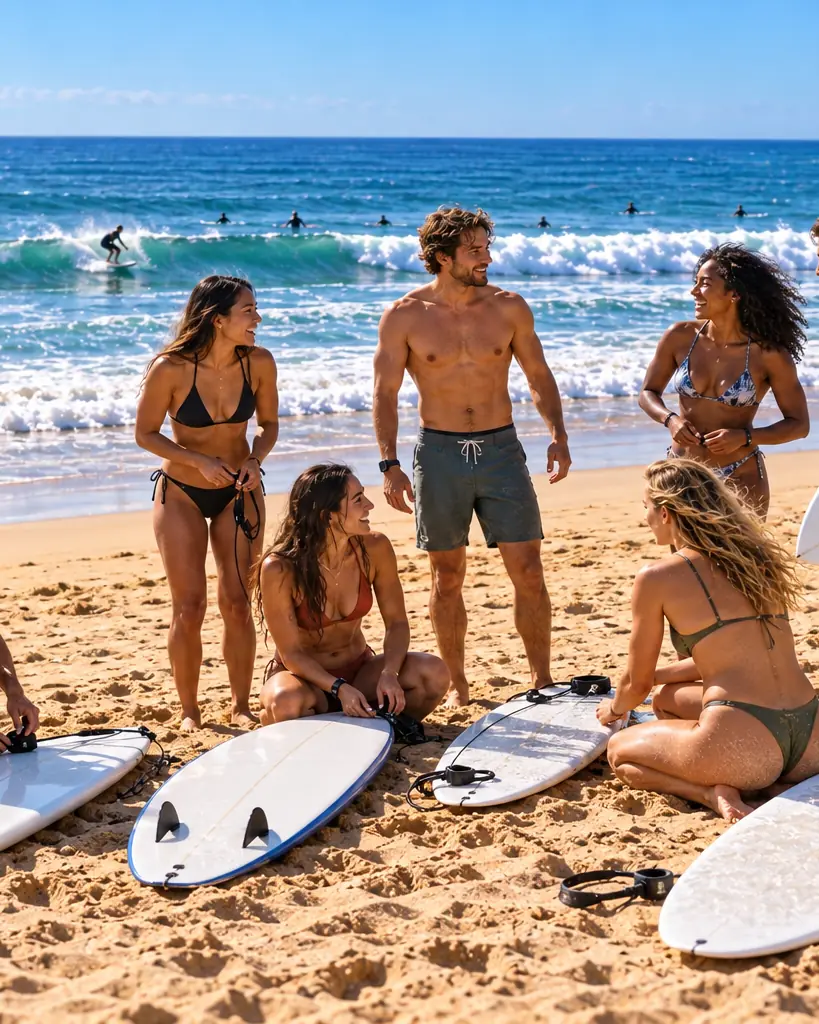
Friends with their boards on the sand, deciding where to surf

Sagres

About 20 miles from Lagos, roughly 30 to 40 minutes by car, where the south-facing and Atlantic-facing coasts meet. Tonel faces west and takes the most swell; Beliche faces southwest, sits in a cove below steep steps and gets tight at high tide; Mareta, the south-facing town beach, is sheltered and works on big winter swells with a north wind. When one side is blown out, the other often works.

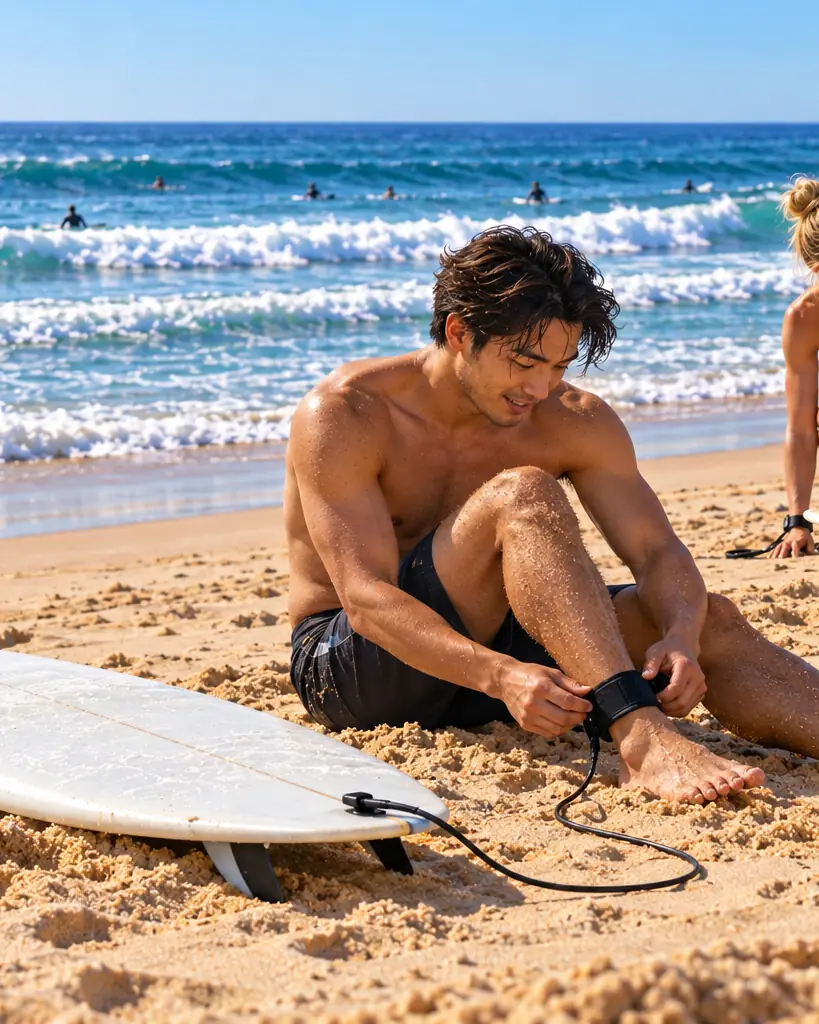
A surfer fastening his leash on the sand beside a friend

Arrifana

A sheltered bay on the Atlantic coast, partly protected from the north wind. The beach break is among the most approachable on that coast for beginners and intermediates on small days; the point break on the south side is for strong surfers on solid northwest swells.

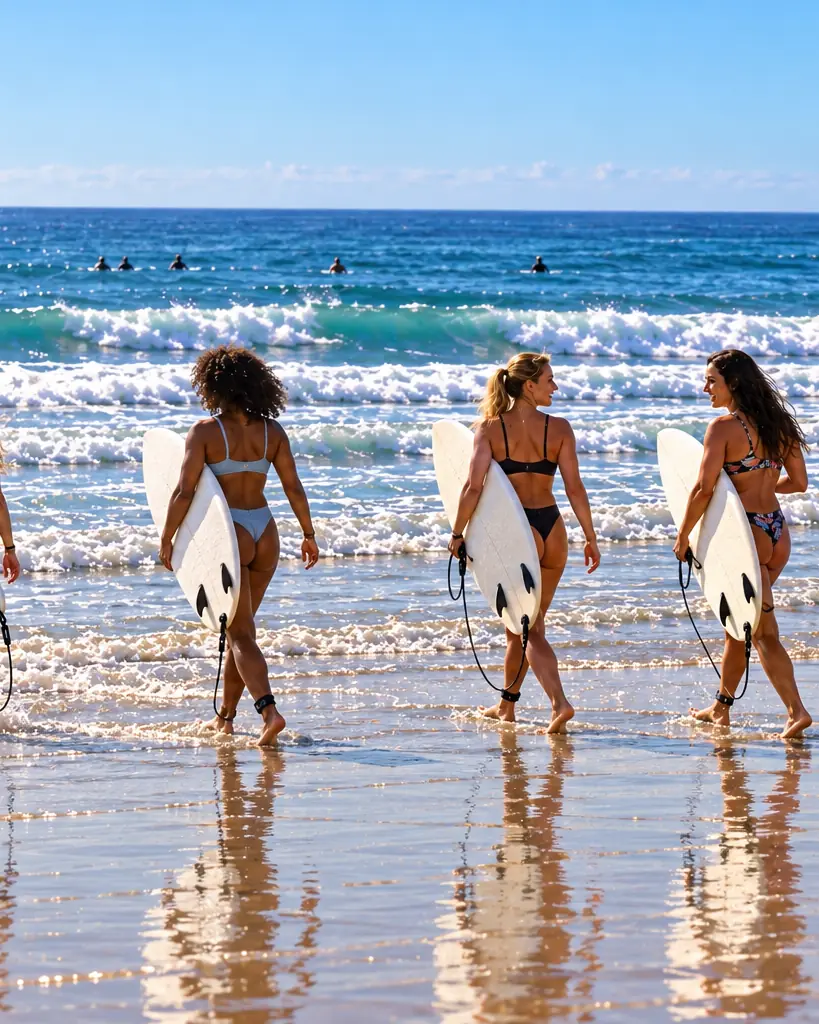
Surfers wading out of the shallows with their boards

Bordeira and Amado, near Carrapateira

A river-mouth beach backed by dunes, powerful, exposed and best for experienced surfers; next door, Praia do Amado, which has hosted international surfing competitions, is slightly more sheltered. In summer the north wind can make this coast choppy by mid-morning, and car parks at Arrifana and Bordeira fill by about 9 AM.

Lagos to the Atlantic beaches takes roughly 40 minutes to an hour by car depending on the beach. Many surfers do both in a single trip: the town beaches on a south swell, the Atlantic coast when the swell is northwest.

A longboarder riding a small wave in Lagos while another surfer waits in the lineup

The Lagos lineup

The Lagos lineup: etiquette.

Surfing is a shared place, and a few unwritten rules are the same everywhere. The surfer closest to the peak, the part of the wave that breaks first, has priority; never take off in front of someone already riding. Paddle around the breaking waves, not through them; share the waves; and if you are new, stay along the beach, away from the main peak, until you can paddle quickly and turn safely. Meia Praia is widely seen as a visitors’ beach, without much localism; some of the reef breaks around Luz and Zavial are different, so watch before you paddle out.

Between sessions, the old walled town is a short walk from the sand, and the cliffs of Ponta da Piedade are a favorite flat-day outing.

See Lagos beyond the surf →

Surf map: Amoreira to Alvor →

Getting around

Getting around Lagos with a board.

From the airport. Faro is about 55 miles away, roughly an hour on the A22 motorway. By train it is slower: there is no station at the airport, so you take the bus or a taxi to Faro station and a direct regional train west to Lagos, about an hour and 45 minutes.

In town. Meia Praia is a short walk from the center, with plenty of parking. Porto de Mós is a short drive, about 10 minutes.

To Sagres. A local bus, route 47, runs between Lagos and Sagres daily and takes about an hour, with fewer departures on weekends and more in summer. By car it is 30 to 40 minutes.

Along the Atlantic coast. Public transport between the surf beaches is thin. A rental car gives you the freedom to chase the swell.

Surfers waxing boards and checking leashes on the sand at Meia Praia, with the lineup behind

Before you go

Practical tips before you go.

  • Wetsuit. A 3/2 covers Lagos for most of the year; a spring suit or 2 mm works in summer. On the Atlantic coast the water runs colder, and a 4/3 is common for much of the year.
  • Flags and lifeguards. Green means safe to swim, yellow means stay at the water’s edge with no swimming, red means danger and no swimming, and a checkered flag means the beach is temporarily unmanned. Lifeguards patrol some beaches in summer only, so outside the season you are on your own.
  • Rips. When the waves at Meia Praia get bigger, strong rip currents can run along it. Speak to a lifeguard or local first.
  • Summer swimmers. In summer the shore break fills with swimmers. Surf early, and give them room.
  • Morning first. Sea breezes can turn the bay choppy by afternoon, and car parks at Arrifana and Bordeira fill by about 9 AM in summer.
  • Reef. Rocks and urchins are real at Porto de Mós. Know where they are, or choose the sand.
  • Plan flat days. Even in the best months, some days are flat. A boat trip to Ponta da Piedade or a clifftop walk makes a good plan B.
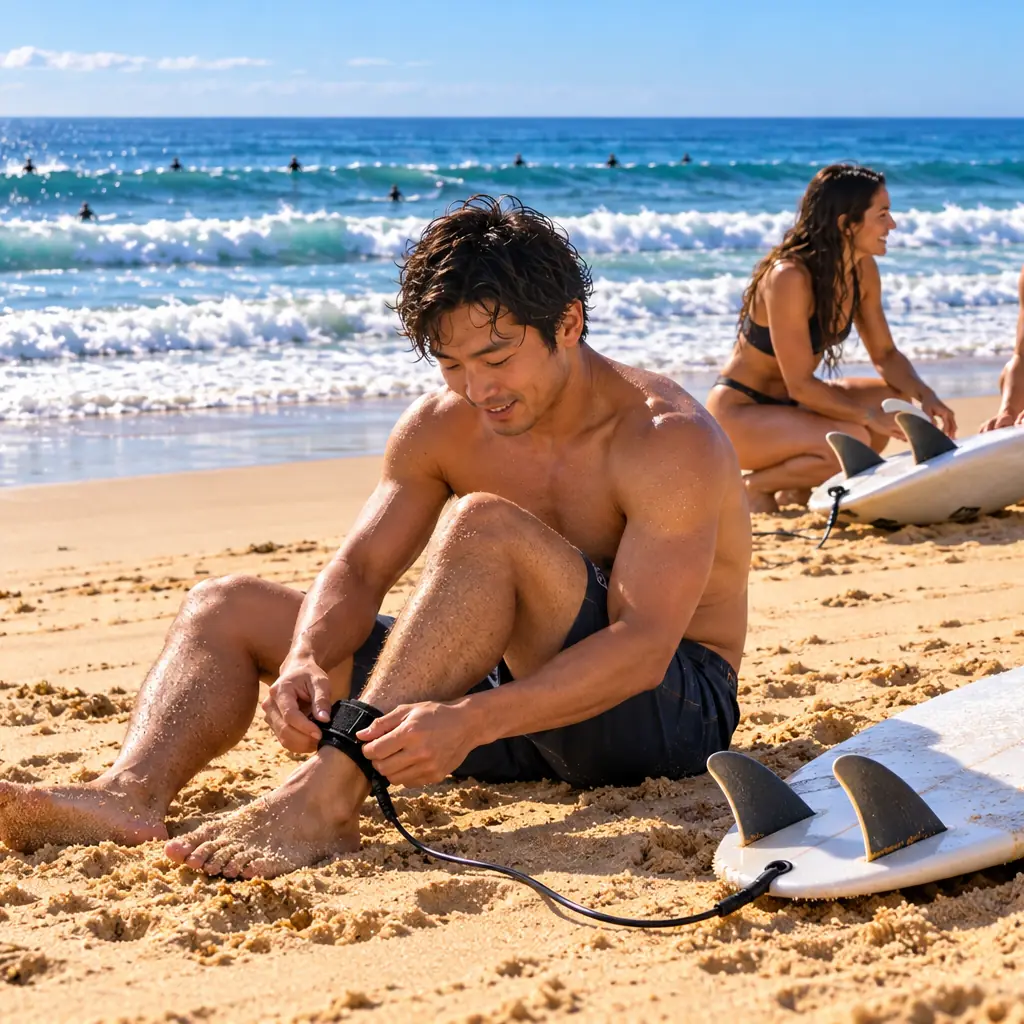
A surfer fastening a leash cuff at the ankle on the sand

Questions

Questions about surfing in Lagos.

Short answers, before you plan.

Surfing in Lagos

Can you surf in Lagos, Portugal?

Yes, when the swell cooperates. Surfers use Meia Praia, a long sandy beach east of town, and Porto de Mós, a cliff-backed beach to the west. Both sit on the south-facing coast, so they work best with the right swell and wind, most often from autumn to early spring. In summer they are often flat.

Is Lagos good for beginners?

Meia Praia is the usual choice for first waves: sandy bottom, plenty of space and a mellow wave when there is swell. Porto de Mós has a reef at its far right end, so newer surfers stay on the sandy stretch. A flat day is a real possibility, so keep the plan flexible.

What is the best time to surf in Lagos?

Local guides point to autumn through early spring for the town beaches, with September, October and May favorites for warm water and gentler conditions. In summer the bay is often flat. The sea averages about 61°F in January and February and about 70°F in September and October.

Which is better, Meia Praia or Porto de Mós?

Meia Praia is gentler, sandier and easier for beginners; Porto de Mós takes more swell, can be punchier and has rocks and a reef, so it suits stronger surfers.

Do I need a wetsuit in Lagos?

For most of the year, yes, but a light one: a 3/2 covers winter, and a spring suit or 2 mm works in summer. The Atlantic coast is colder, and a 4/3 is common there.

Where do surfers go when Lagos is flat?

They drive west, to the stretch of the West Coast beyond Sagres. Sagres is about 20 miles from Lagos, 30 to 40 minutes by car, and the Atlantic beaches around Arrifana and Carrapateira are roughly 40 minutes to an hour away. You will want a car and a look at the forecast before you set out.

Do I need a car to surf around Lagos?

Not for Meia Praia, which is a short walk from town. For Porto de Mós, Sagres and the Atlantic coast, a car is the easy way. A local bus runs between Lagos and Sagres, but beaches farther along that coast are poorly served by public transport.

How do I get from Faro airport to Lagos?

Lagos is about 55 miles west of Faro, roughly an hour by car on the A22. By train, take a bus or taxi to Faro station and a direct regional train to Lagos, about an hour and 45 minutes.

The other way to ride

What can I do on a flat day in Lagos?

Drive west to the Atlantic beaches, walk the cliffs at Ponta da Piedade, or ride a wave made by a boat: wake surfing on the bay, a calmer way to practice carving. See the end of this page.

Is a Velocity week a surf trip?

No. It is a curated week in Lagos: a villa with ten private bedrooms, a chef, the coast and coached wake surfing as the signature. Ocean surf lessons are not part of the week.

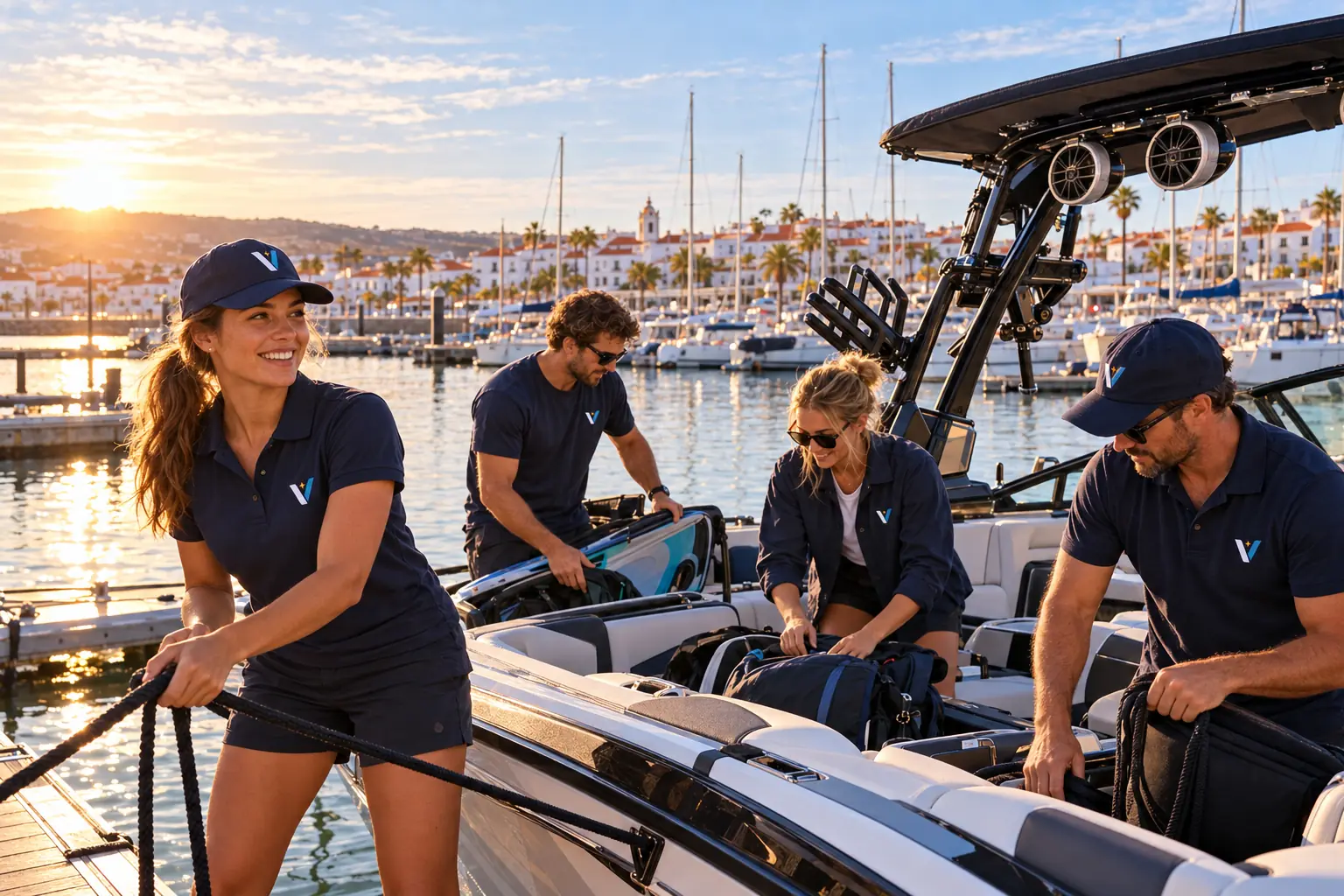
The crew on board the boat in the Lagos marina

The other way to ride

Wake surf: a wave on every run.

On the bay off Meia Praia, early in the morning, a boat shapes its own wave and you ride it, with no paddling and no waiting for a set. It is a different pleasure from the ocean: a wave on every run, whatever the swell is doing, in a place where you can learn, and later sharpen your skills and try new tricks.

Many first-timers are up within a session or two, with no guarantee. Everyone learns at their own pace, with a coach on board.

  • Learn. A rope to get up, then let go.
  • Sharpen. Turns and trim on a wave that repeats.
  • Play. Spins and airs, when you are ready.
See how a session works →
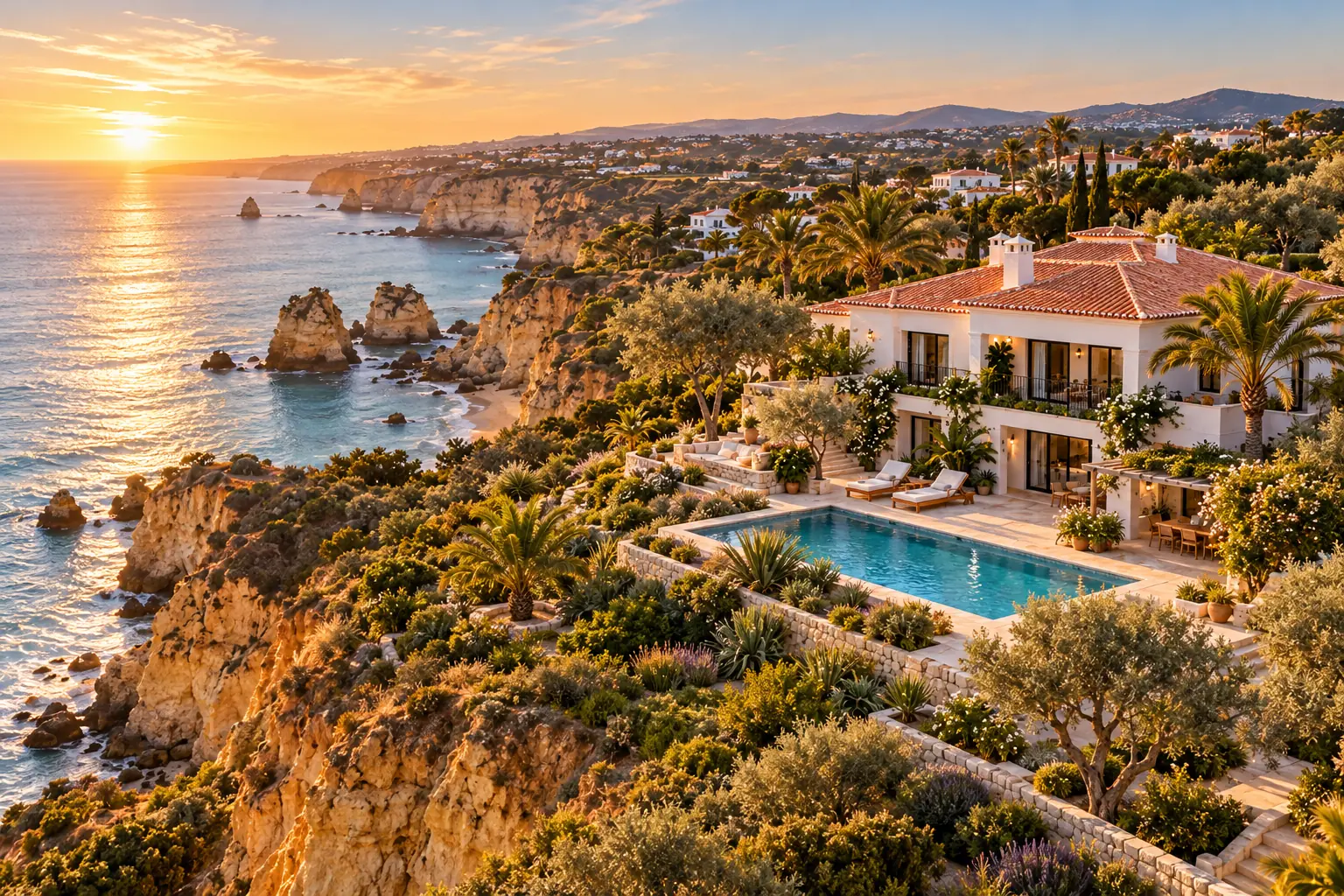
The villa with ten private bedrooms and its pool on the cliff above the Atlantic, seen from above

Our offer

Wake surf, inside a week built around it.

Velocity is a curated week in Lagos. Wake surfing is the signature moment, and around it are a villa with ten private bedrooms and a pool above the coast, a private chef, a modern wake boat with a coach on board, and the coast itself: the cliffs of Ponta da Piedade, the old town, an afternoon at a vineyard, a day at Sagres.

  • Seven nights, Saturday to Saturday, Faro to Faro, for a small group of never more than 12.
  • Coached sessions with video review, all gear included, wetsuits too.
  • The chef’s table, with every breakfast, brunch and dinner included.
  • The 2027 season. Registrations of interest are open. Registering is free and doesn’t commit you to anything.

We never promise perfect weather. When the sea says no, the day pivots to the coast, the pool or the town.

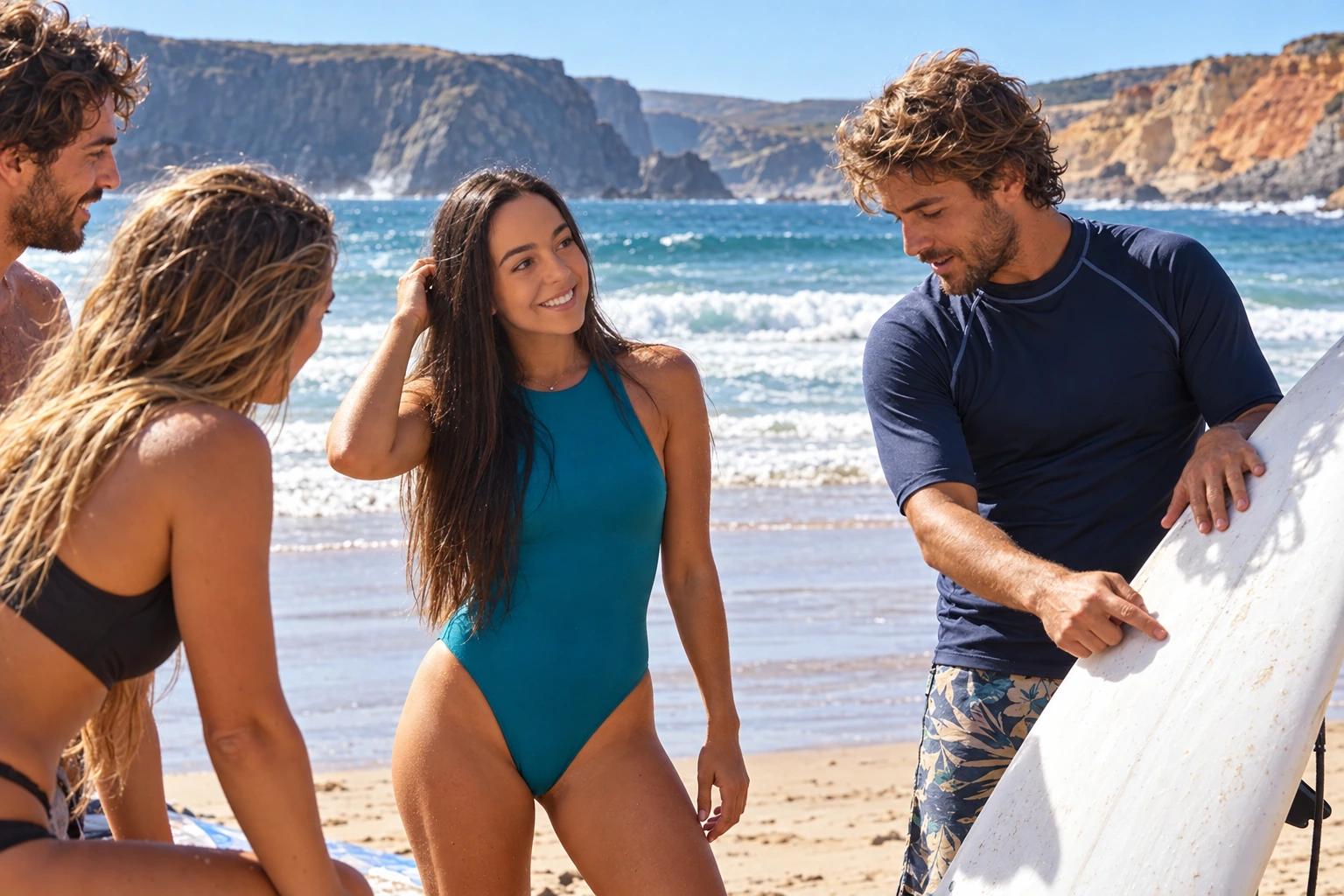
Friends talking on the beach after a session, one in a rashguard holding his board

Before you paddle out

The best sessions are the ones nobody interrupts.

Leave the phone on the towel. SAND answers your business line, web form and email in your voice, and hands you one calm summary when you walk up the beach.

Leave your name in the SAND →
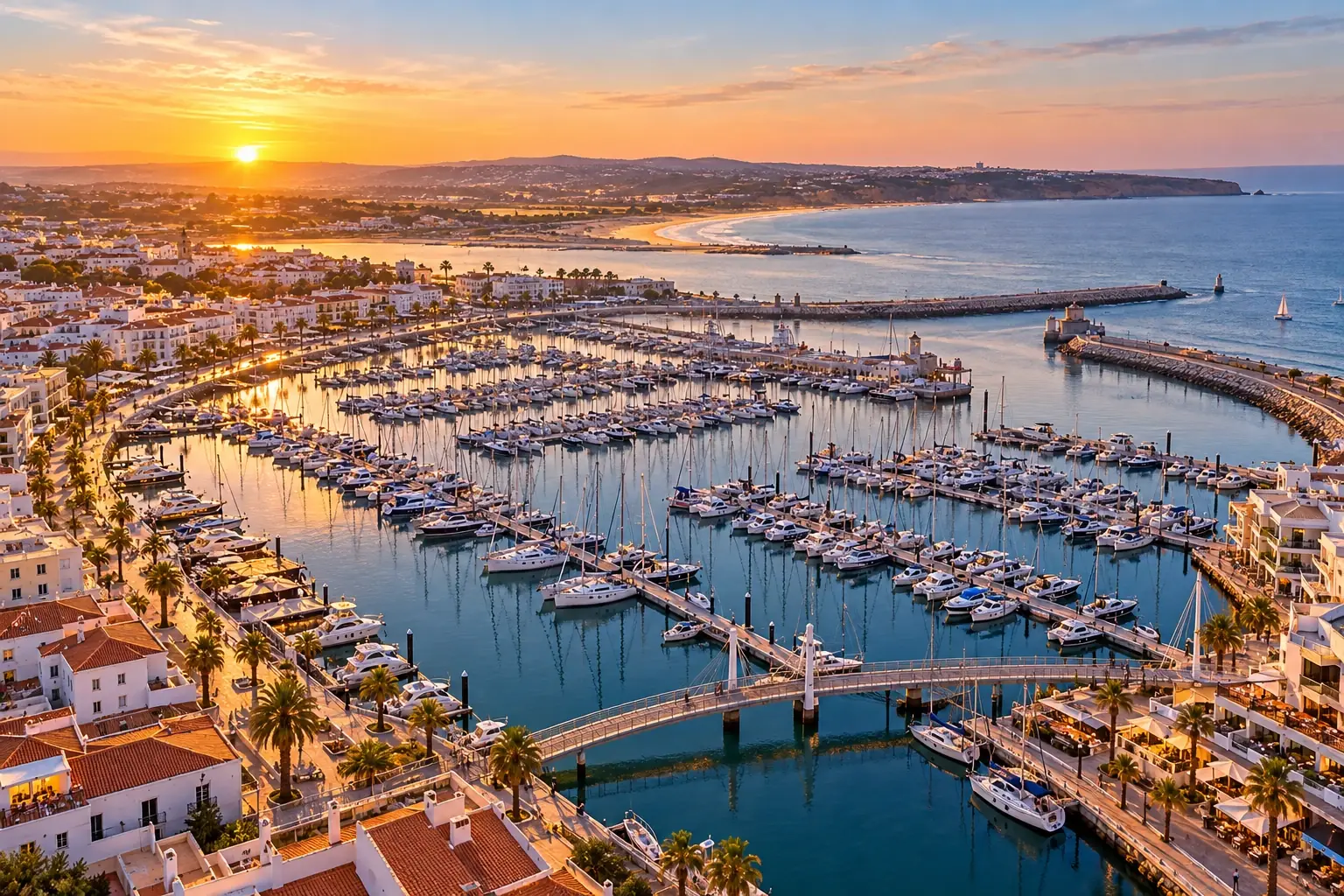
The Lagos marina at sunset, seen from above

Where to next

Plan your week on the water.

Tell us who you would bring and when you would like to come.

Back to Home →

SAND

An hour in the water, kept calm.

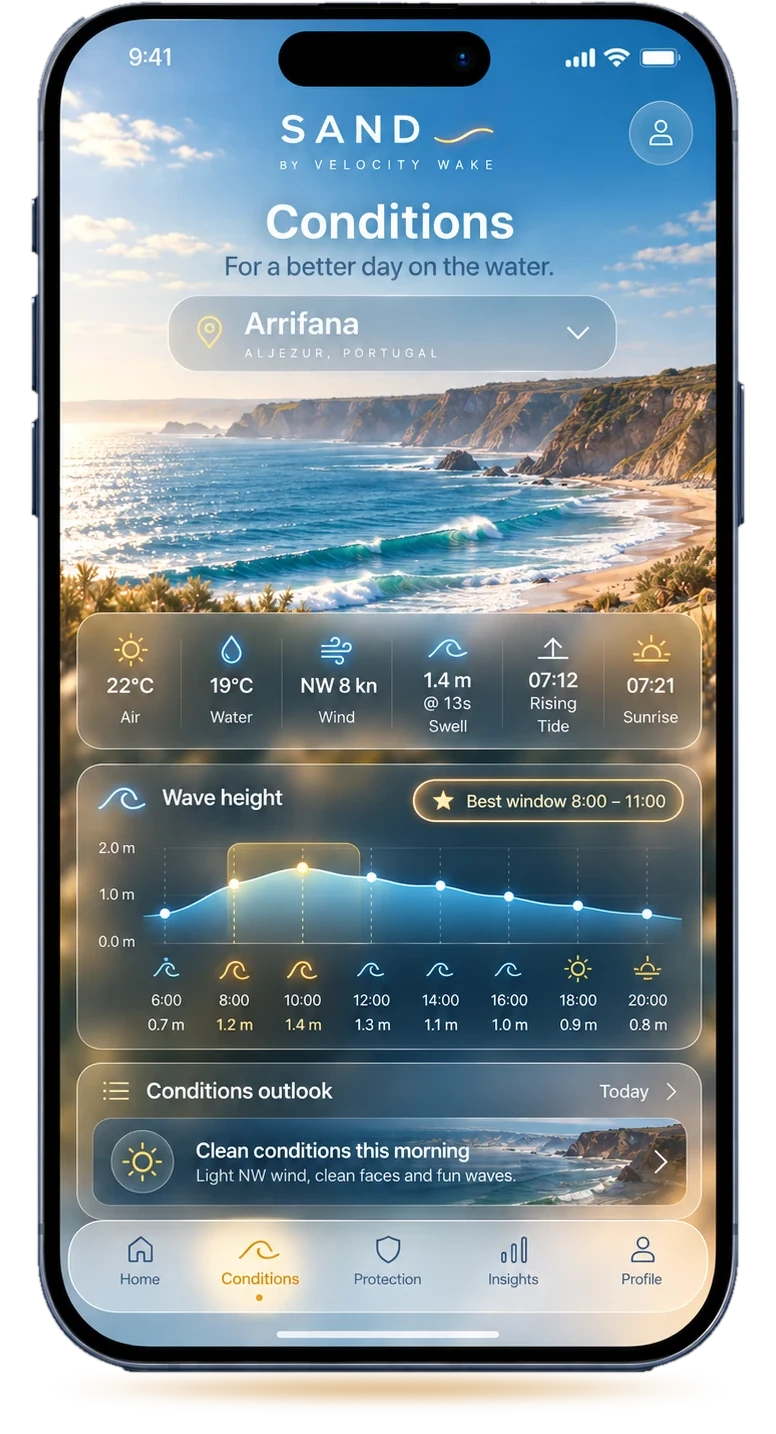
SAND is an iPhone app we’re building for anyone who wants time away. While you’re out on the Lagos swell, it will look after your calls and enquiries, family can still reach you, and a short recap is waiting when you walk back up the beach.

Preview, coming to iPhone

See SAND →