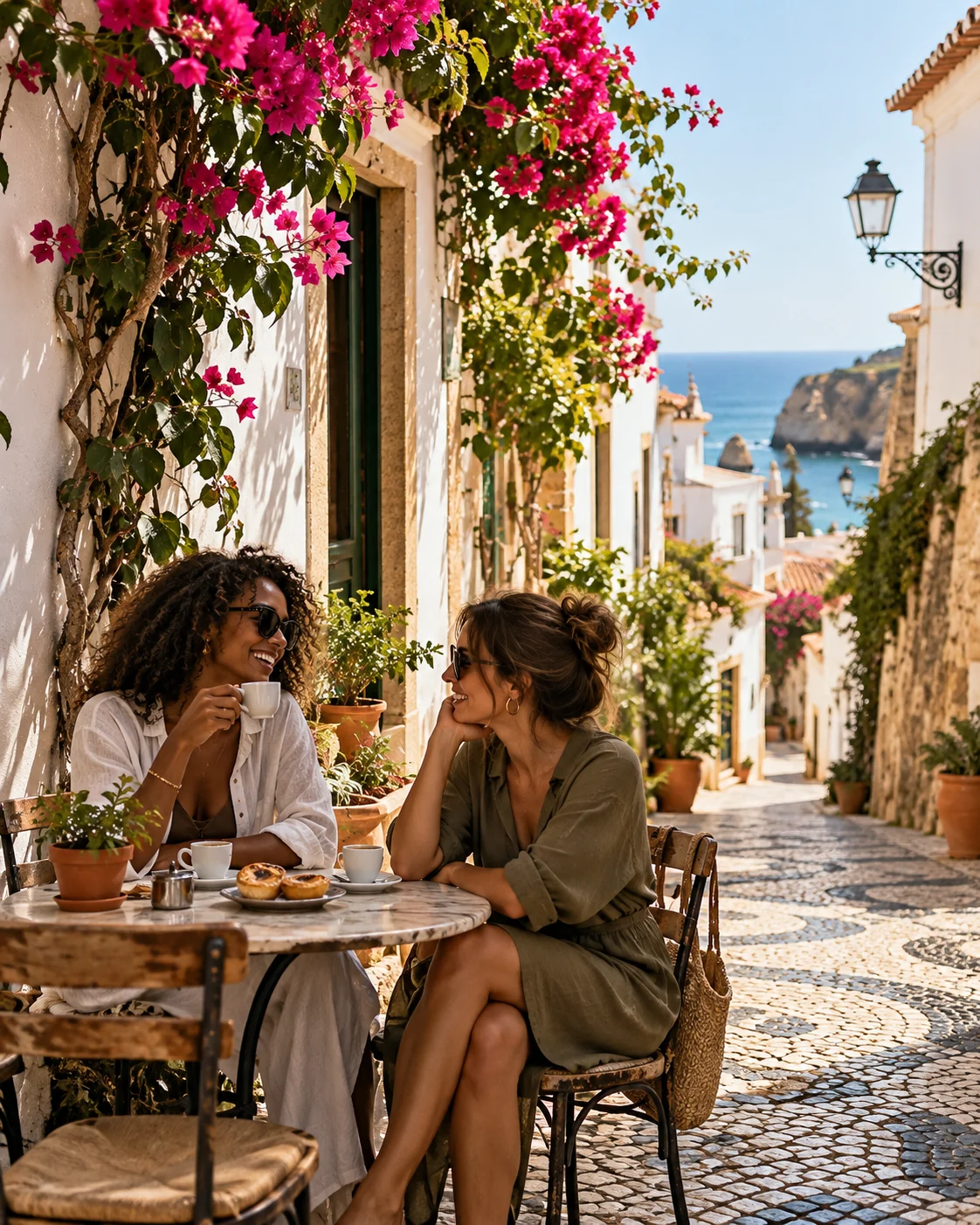
The old town
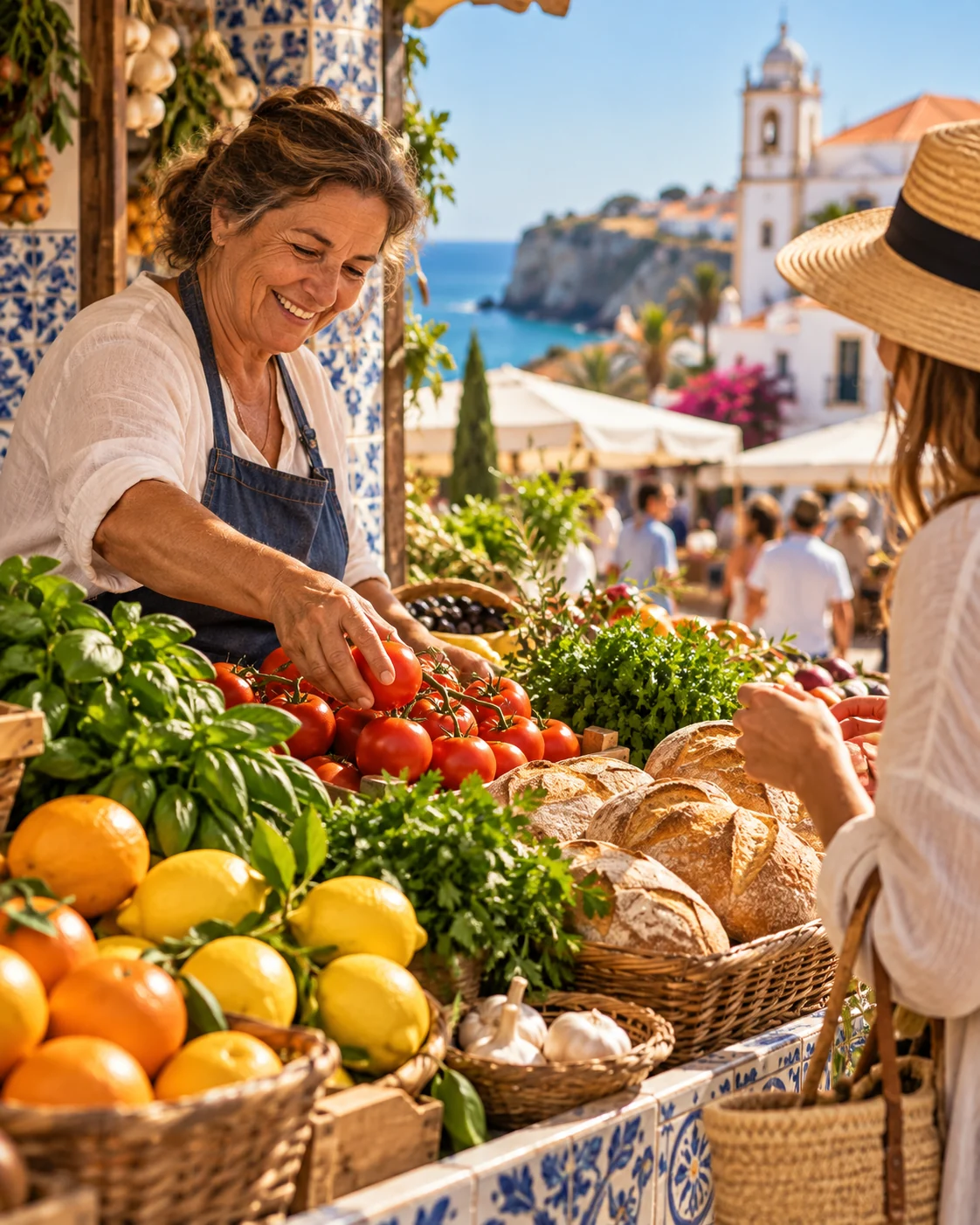
Cobbled streets and long lunches. The Mercado da Avenida on the riverfront sells the night’s catch, fruit and honey every morning but Sunday, and Don Sebastião has served traditional Portuguese cooking in the old town since 1979.
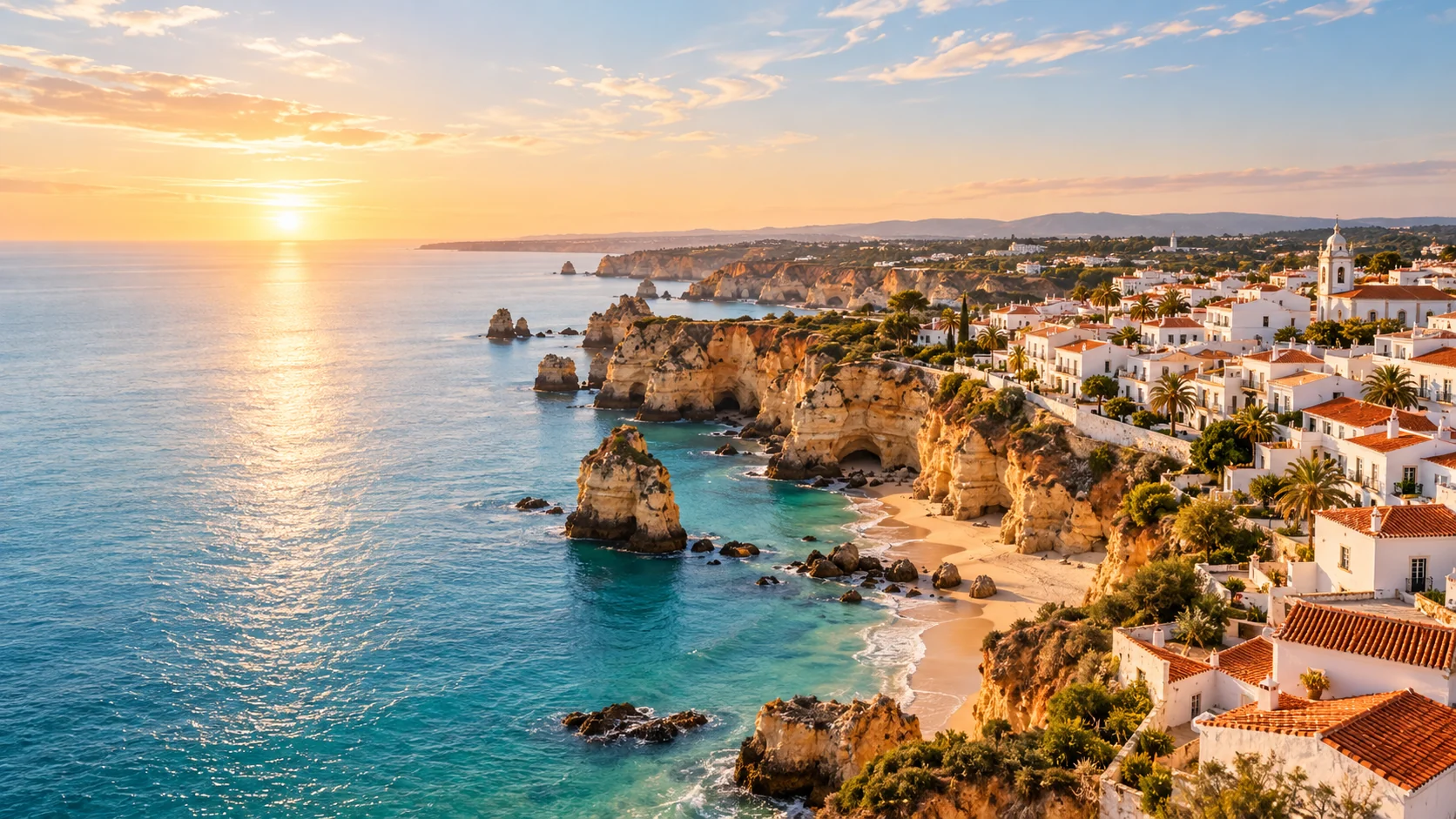
Lagos, Portugal
Golden cliffs, clear water and an old town that’s easy to love. As much to do on land as on the water.
Come for the coast.
Lagos at a glance
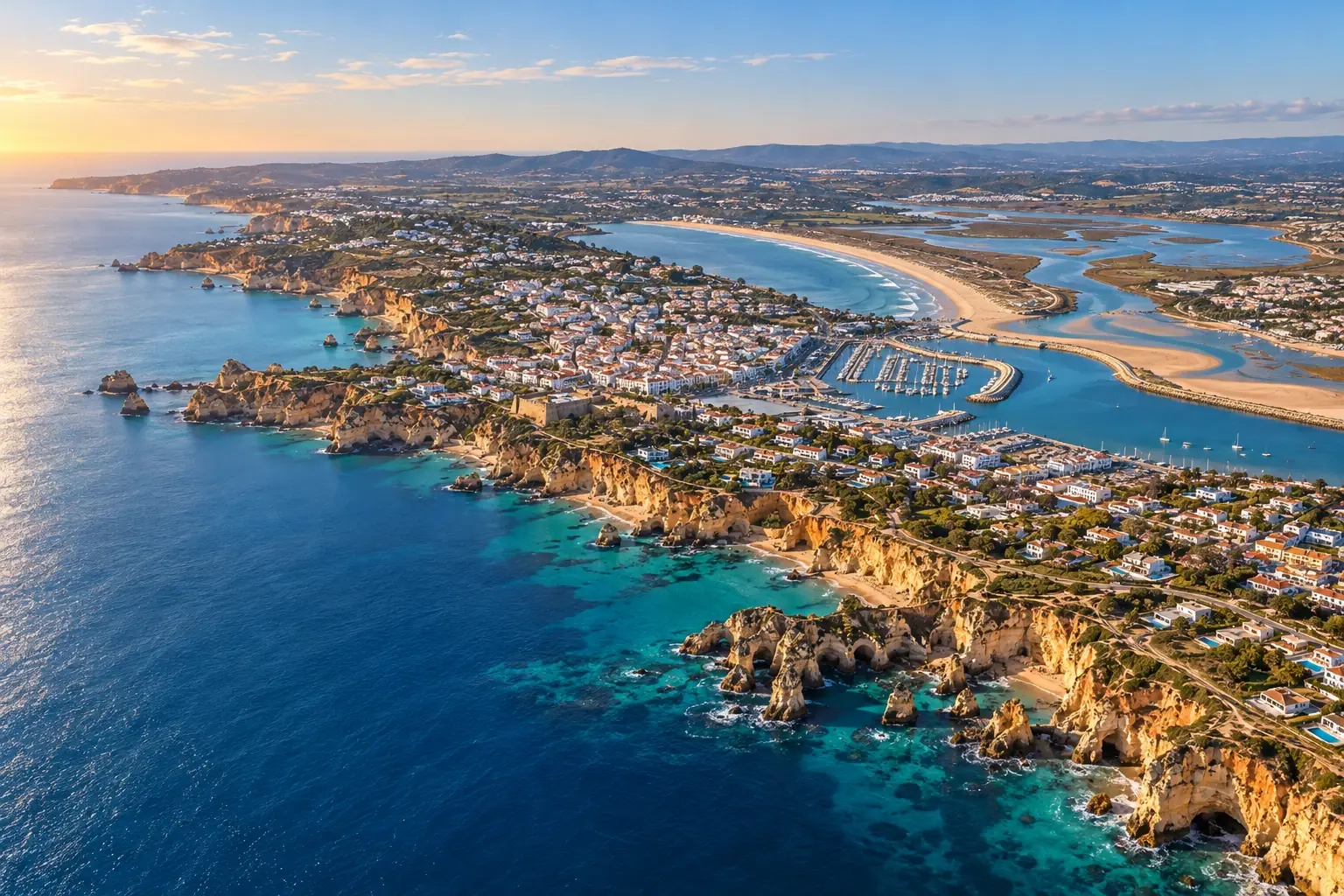
Lagos sits at the western end of the Algarve, where the south coast turns toward the open Atlantic: a fishing town with a walled old quarter and a marina, long sands to the east and cliff coves to the west. Here’s what to know before you go.
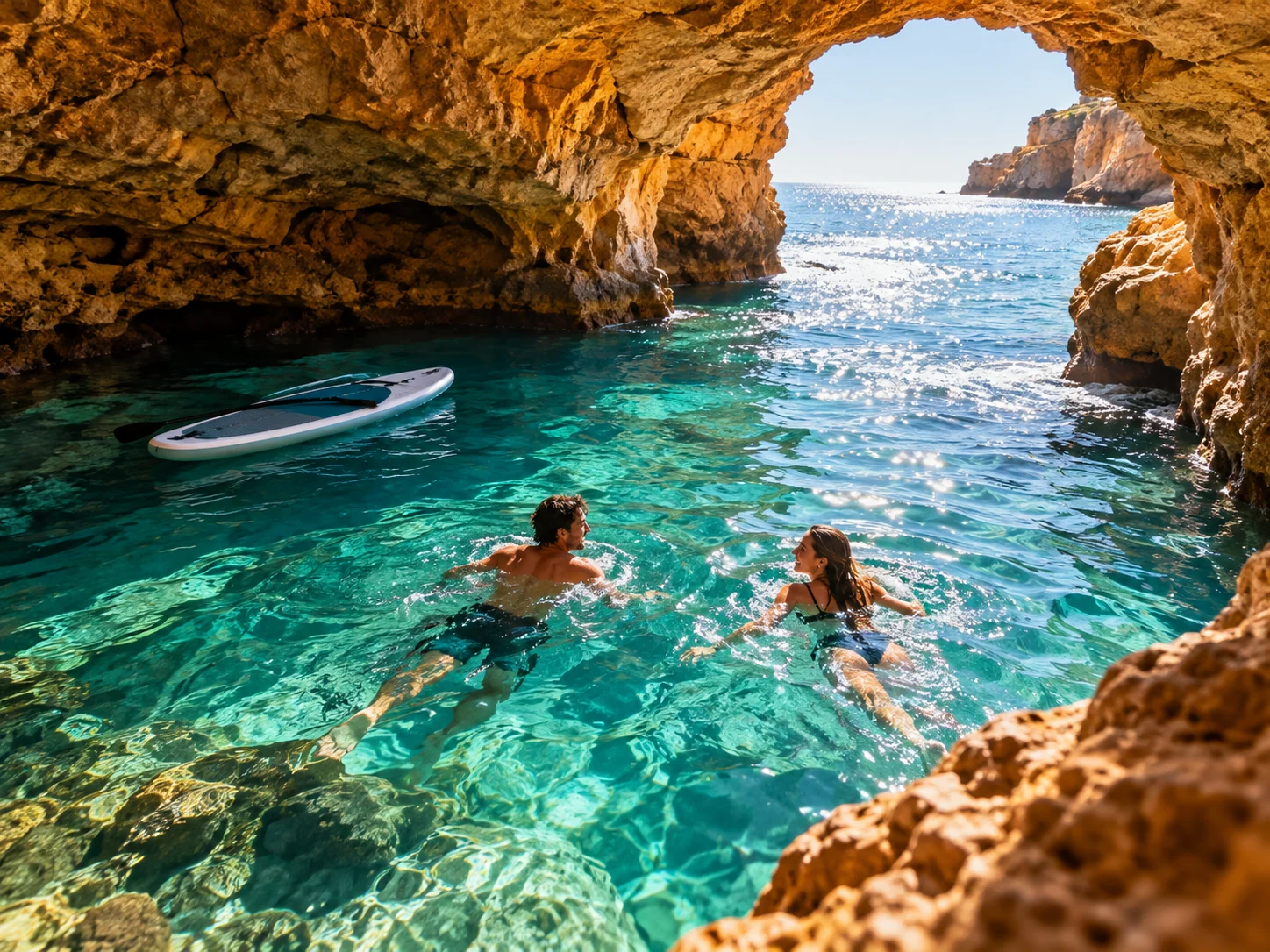
Lagos boat trip
Sea caves, grottoes and quiet beaches below the cliffs, many of them easiest to reach by boat. A boat trip along this coast is part of the week, timed for the calmest part of the day, with a swim stop in a cove when the sea allows.
Follow the coast
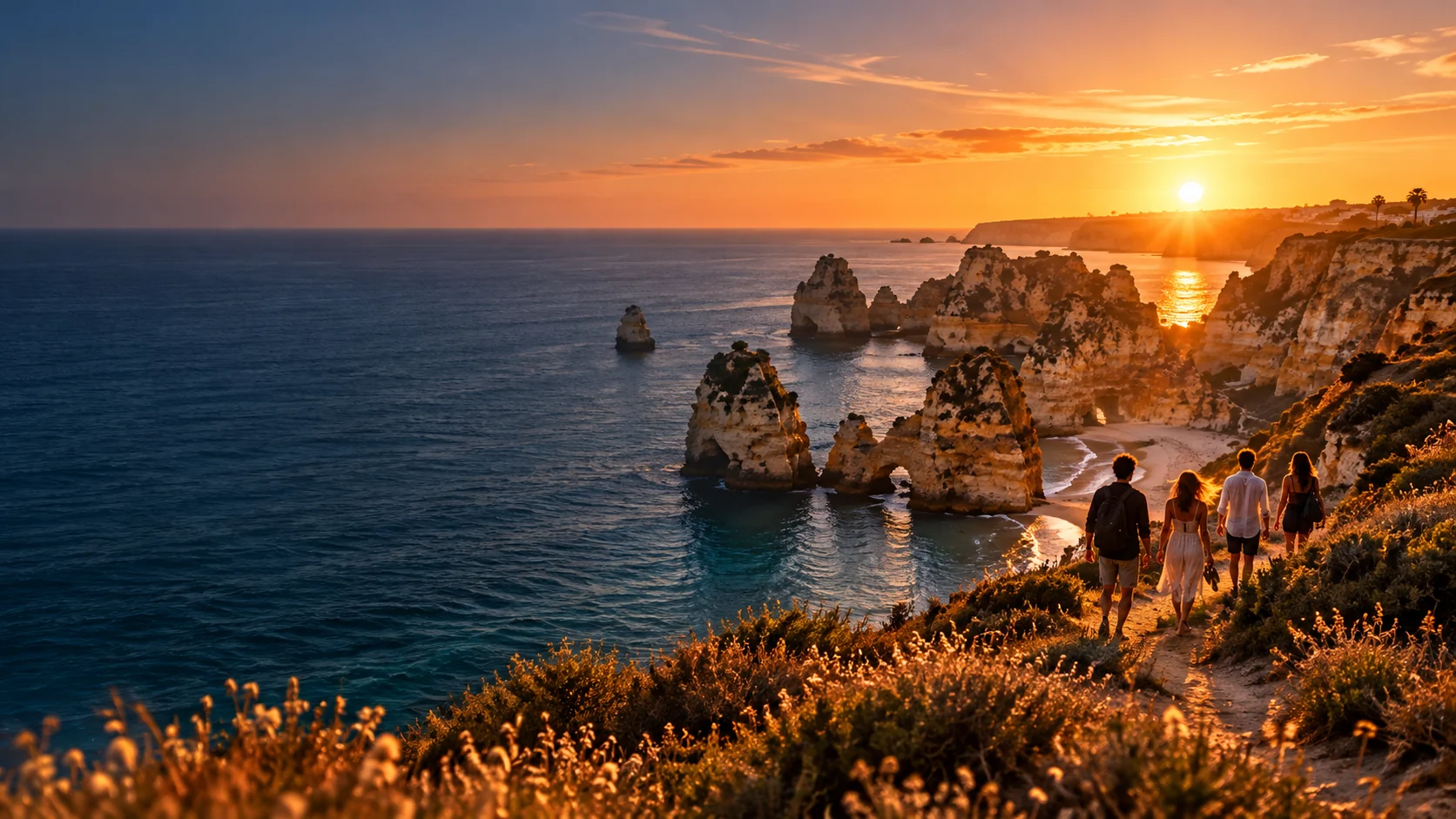
From the grottoes to the cliff trail, the coast around Lagos rewards a slow pace: by boat, on foot, with a swim whenever the water calls. Meia Praia runs about 2.5 miles east of town, a long, open sweep of sand for a morning walk or an idle afternoon. To the west, small beaches such as Praia Dona Ana, Praia do Camilo and Praia do Pinhão hide below golden cliffs, reached by steps from the clifftop, and the larger Porto de Mós lies just beyond the Ponta da Piedade lighthouse.
Surfing in Lagos: a local guide →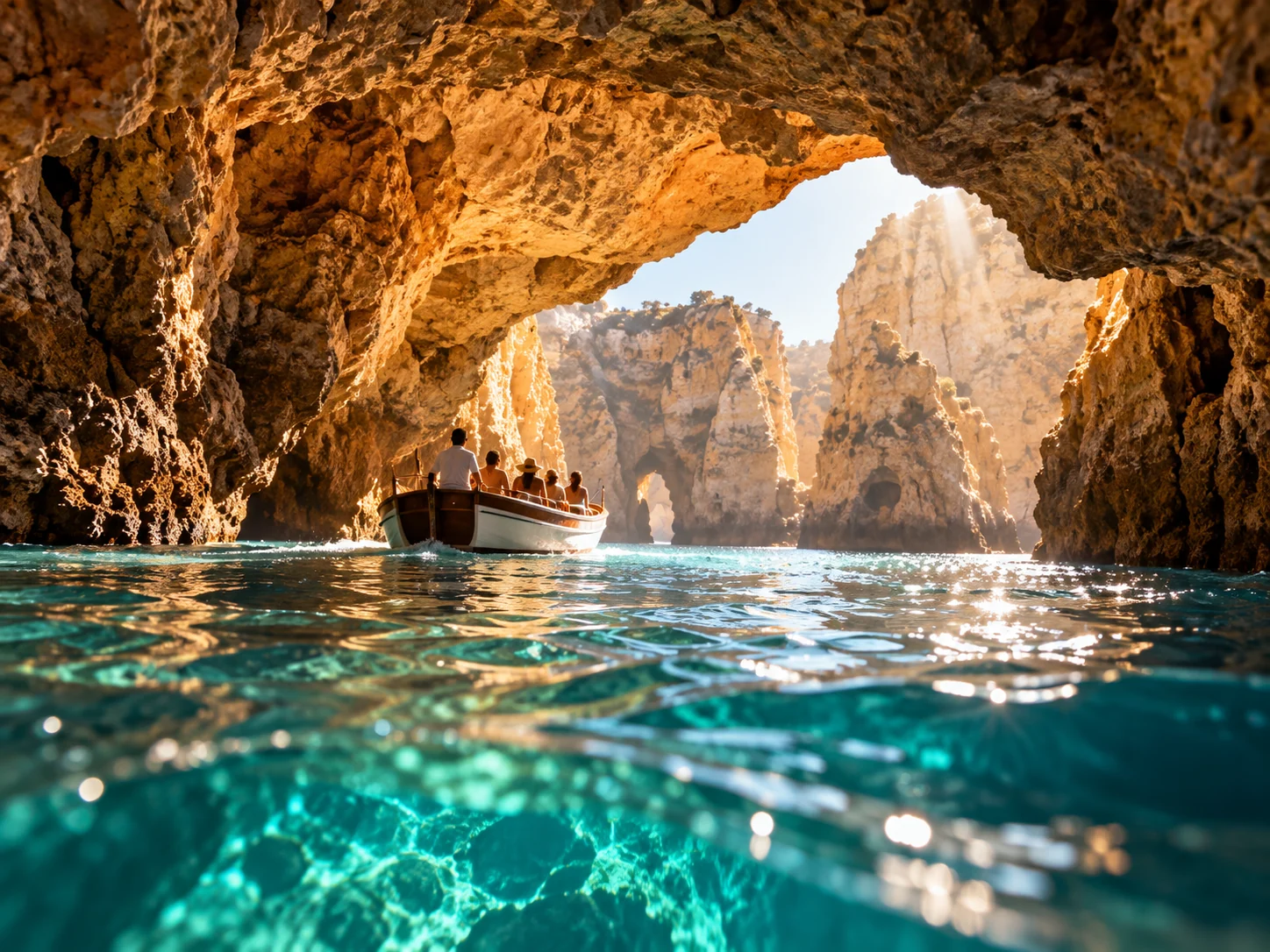

The town and the hills
Morning markets, a café in the old town and vineyards just inland. Lunch can take all afternoon. Walk the old town walls and cobbled lanes, buy fish and fruit at the market by the river, taste Algarve wine a short drive into the hills, and end the day at Cape St. Vincent, about 40 minutes west by road, where the land runs out and the sun drops into the Atlantic.
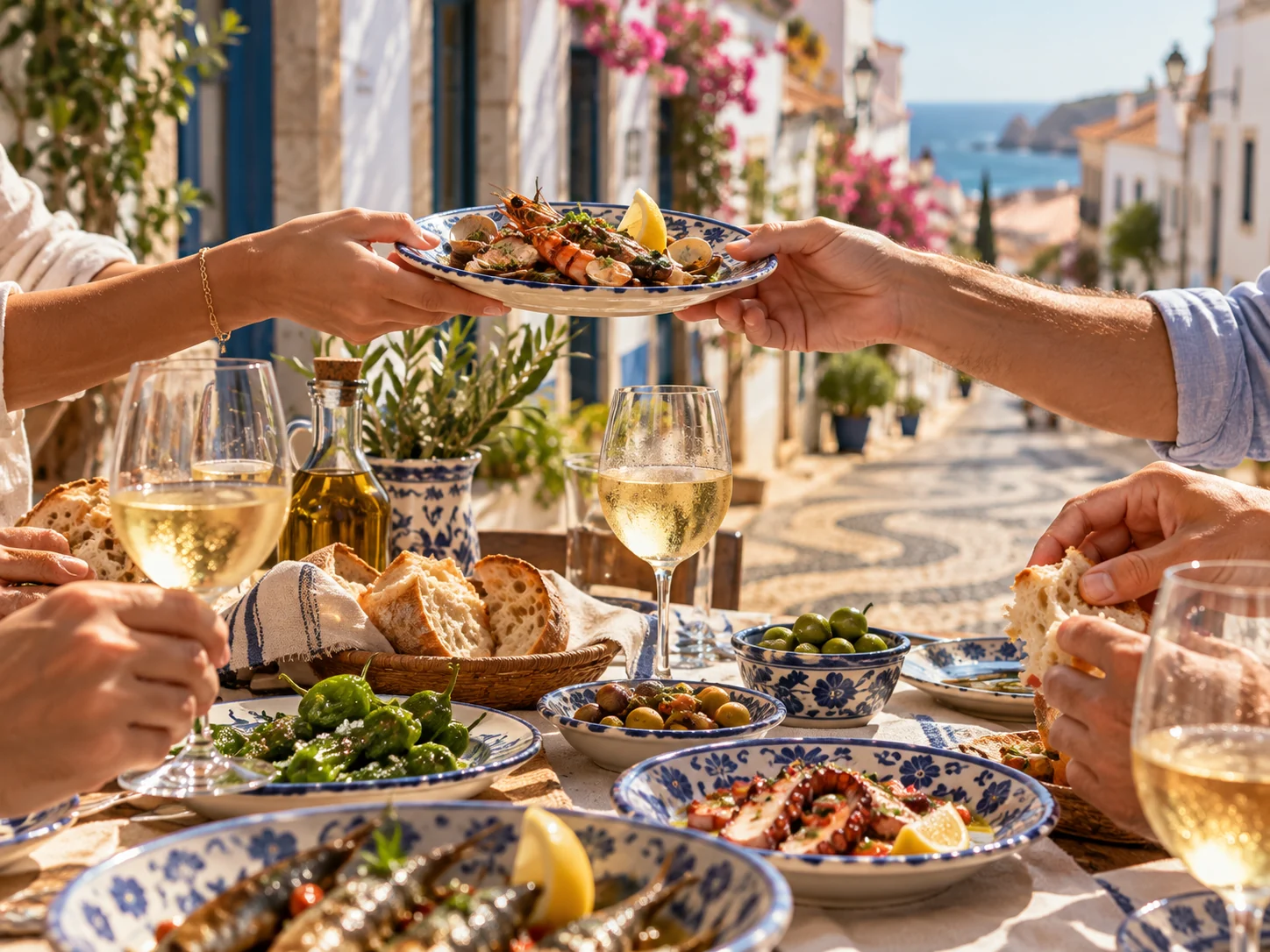
Food and wine
Lagos eats from the sea: grilled sardines in summer, cataplana stewed in its copper pan, rice thick with shellfish, then figs and almonds from the hills, with Algarve wine poured alongside.
Cobbled streets and long lunches. The Mercado da Avenida on the riverfront sells the night’s catch, fruit and honey every morning but Sunday, and Don Sebastião has served traditional Portuguese cooking in the old town since 1979.
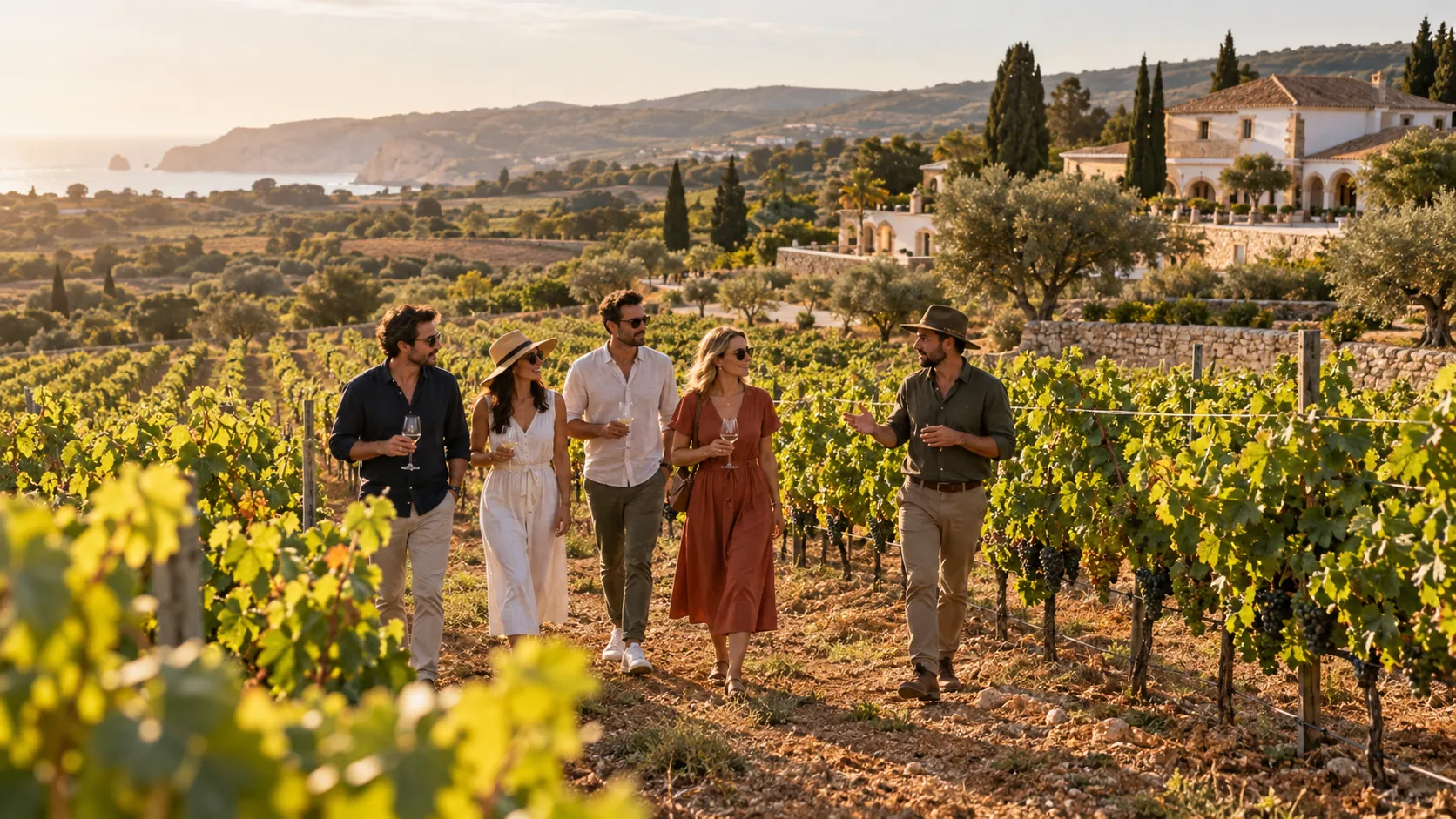
A short drive inland, organic estates such as Monte da Casteleja near Lagos and Monte do Além in Odiáxere open for tastings, and Morgado do Quintão near Lagoa pours Negra Mole, the Algarve’s own grape, from old vines.
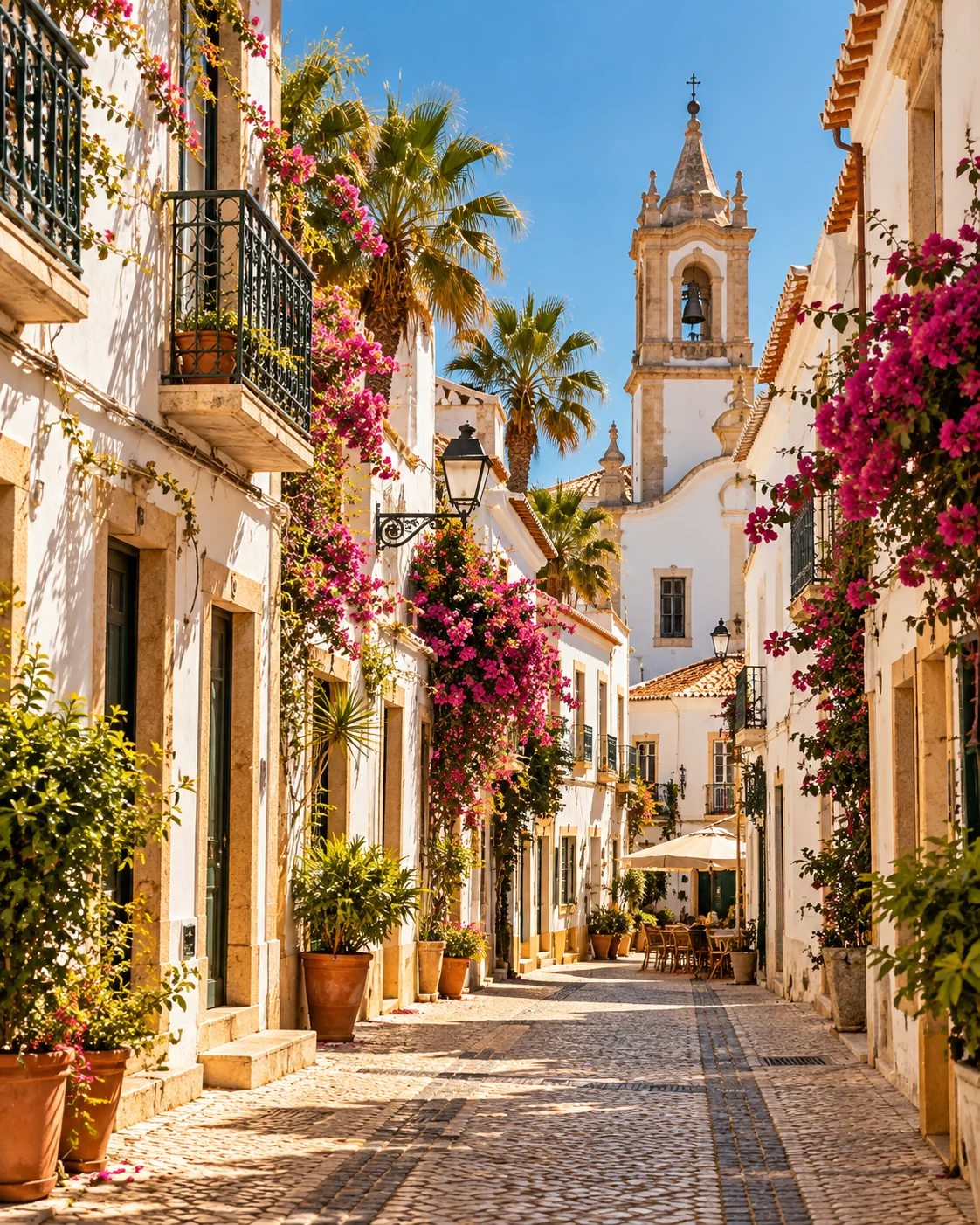
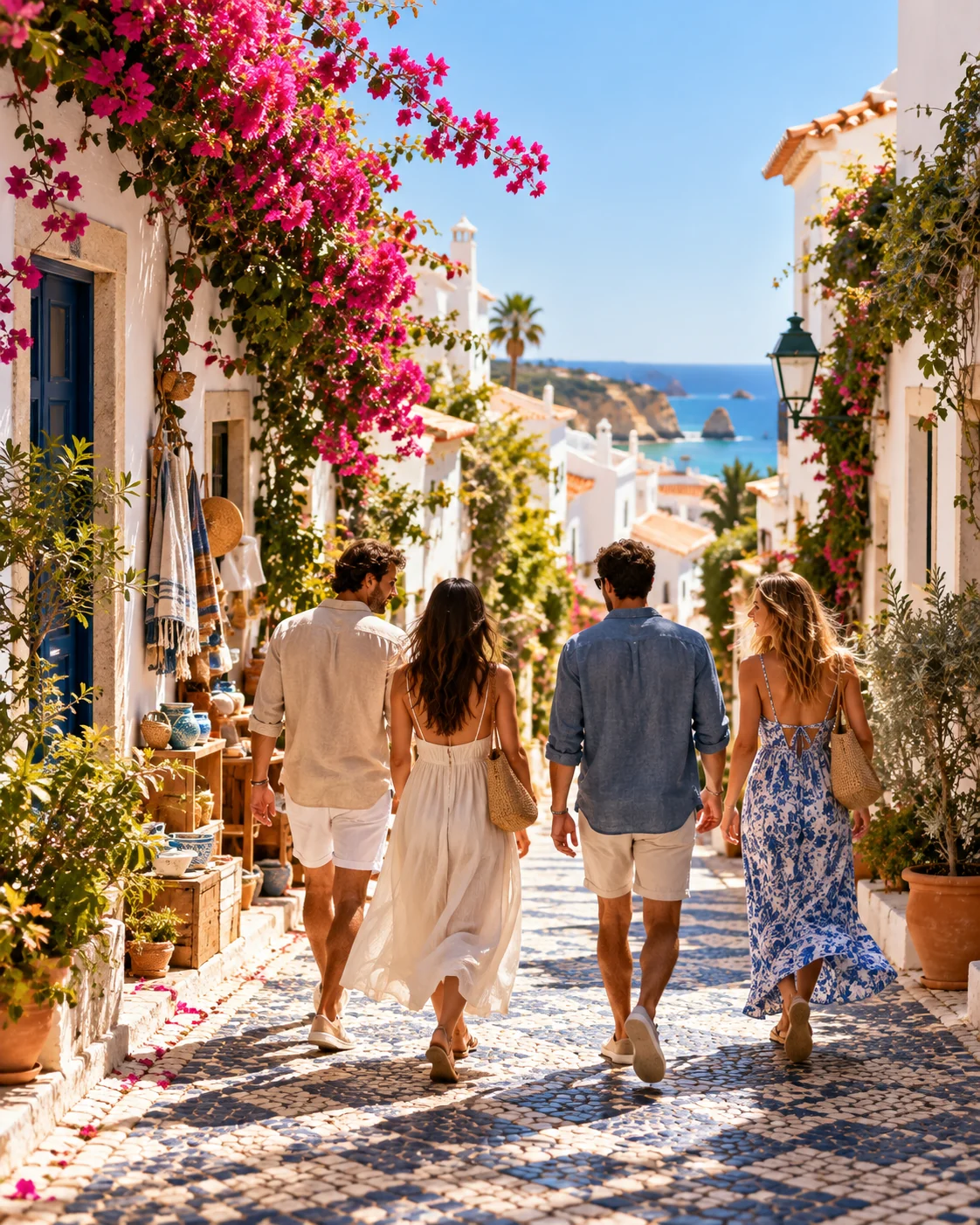
Whitewashed houses, tiled facades and bougainvillea over the lanes of the old quarter, at their best in the early evening, when the heat goes out of the day and the café tables fill.
When to come
The Velocity season runs April to October. There’s no weather guarantee here or anywhere: when the sea says no, the day moves to the coast, the town or the table.
Quieter and milder. Long walks, long lunches and room to spread out on the beaches.
Warm days, warm evenings, and the peak-summer crowds not yet arrived or already gone.
The hottest, busiest months. The sea can start fresh while the north wind pushes the warm surface water out, then softens when the wind turns south, most often around July.
Getting around
Lagos is compact, and the villa week is arranged so that you rarely need a plan.
The old town is small. Cobbled lanes, the market, cafés and the fort sit within a short walk of each other.
From the marina, small boats thread the arches of Ponta da Piedade, and the bay is the home water for every Velocity session.
The vineyards inland, the beaches west toward Sagres and Cape St. Vincent, and Faro airport are all an easy drive.
Landmarks
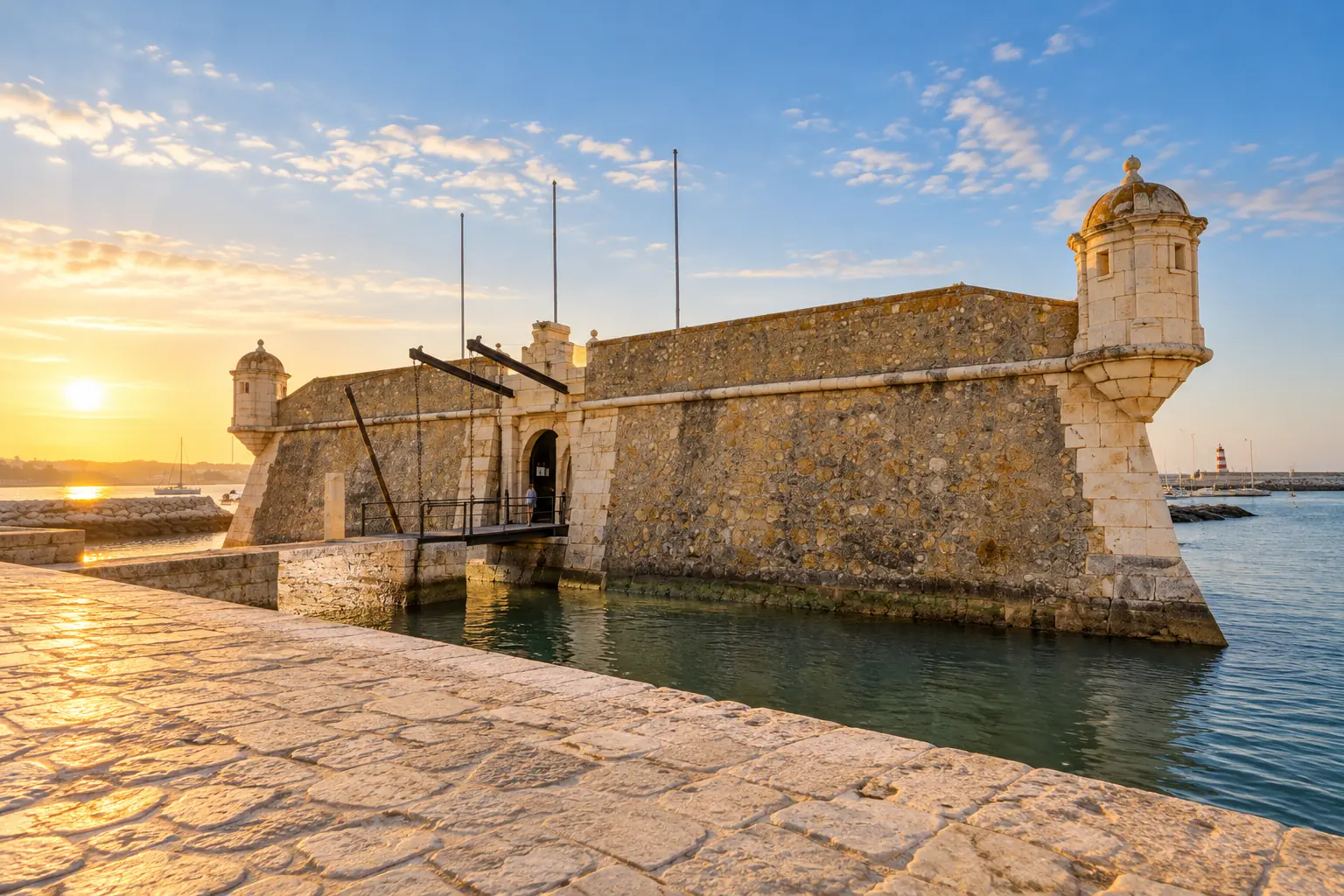
Where the old town meets the harbor mouth, the Forte da Ponta da Bandeira keeps its watch. Walk its walls near sunset and the whole bay turns the color of the stone: gold, then rose, then the long blue hour. It is a short stroll from the marina, and the kind of place where a short walk becomes a long one.
Morning in town
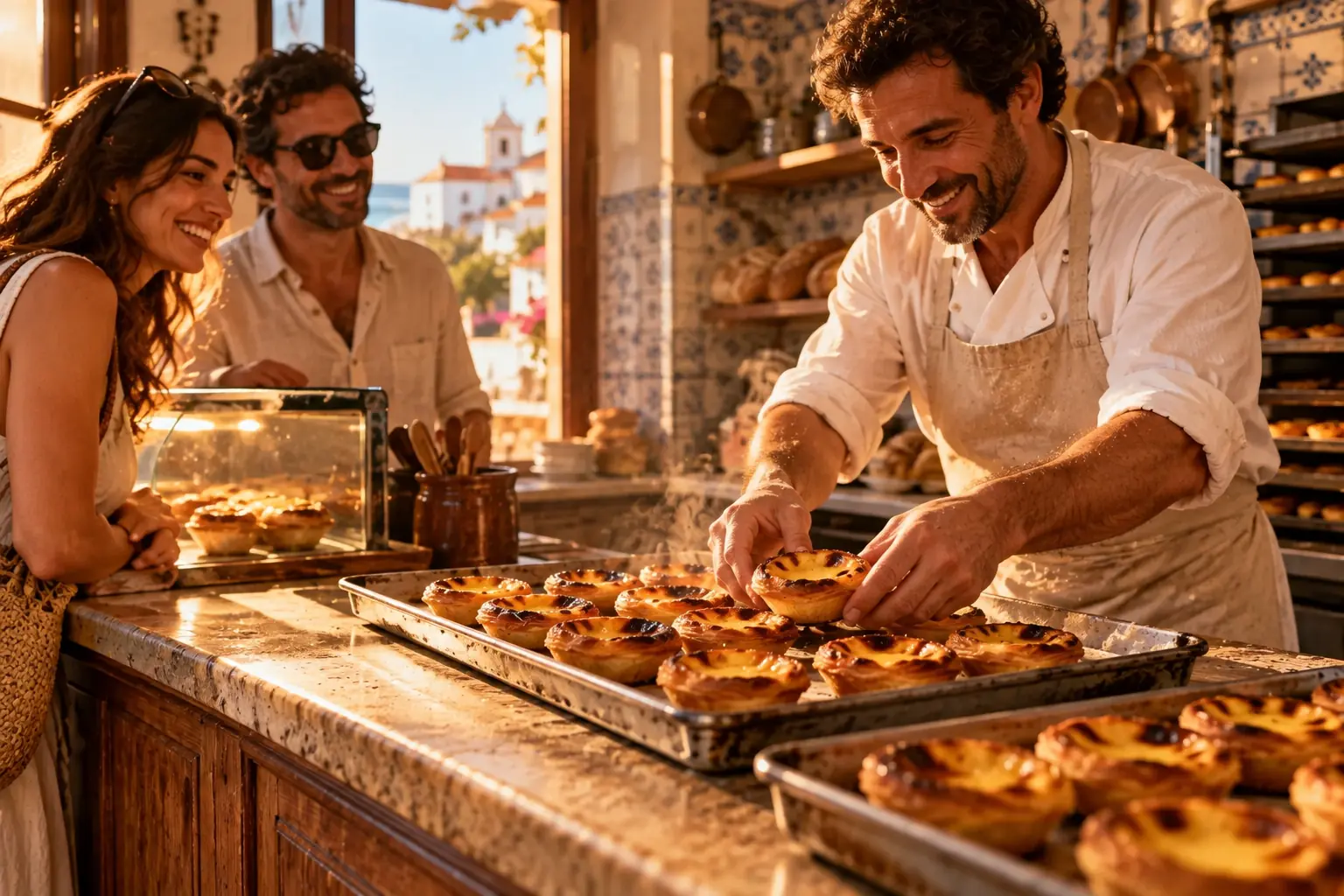
Lagos wakes up at the bakery counter. Custard tarts come out warm, the espresso is short and strong, and the room fills with neighbors. It is the easiest local ritual to join, and one of the best reasons to wander into the old town on a free morning.
The lagoon
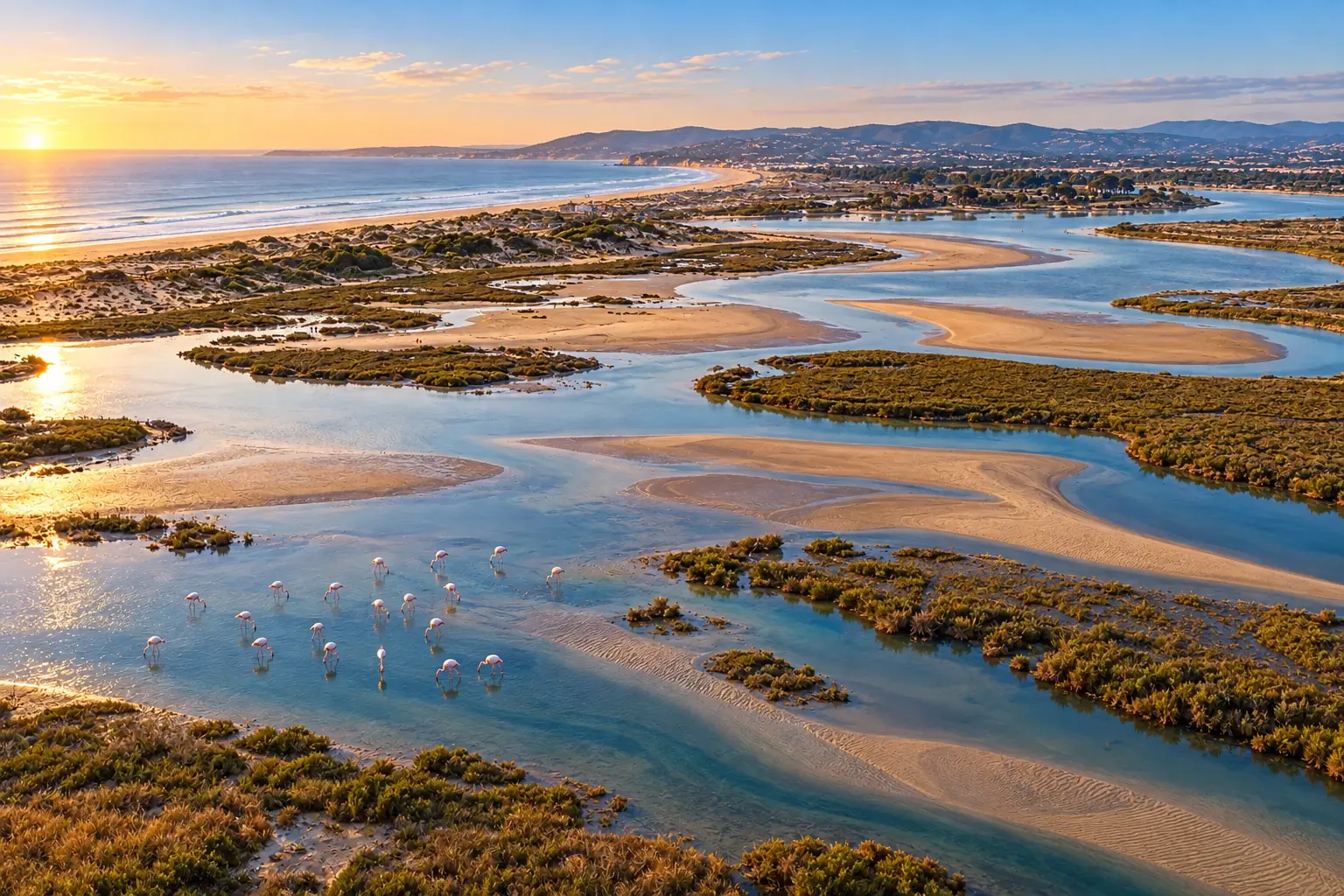
East of Lagos, near Faro, the Ria Formosa is a maze of channels, sandbars and salt marsh. At dusk the light turns the shallows to glass and, if you look closely, a few flamingos work the tide line. It is a quiet detour for guests who land in Faro with time to spare.
Plan your week
Tell us who you’d bring and when you’d like to come.